


Choque cultural: sorpresas cotidianas
Explora las costumbres cotidianas relacionadas con las comidas, los saludos, las compras y las conversaciones. Descubre cómo pequeñas diferencias pueden dar lugar a momentos sorprendentes.
Preview
Questions with solutions-
1. Elige la respuesta correcta.
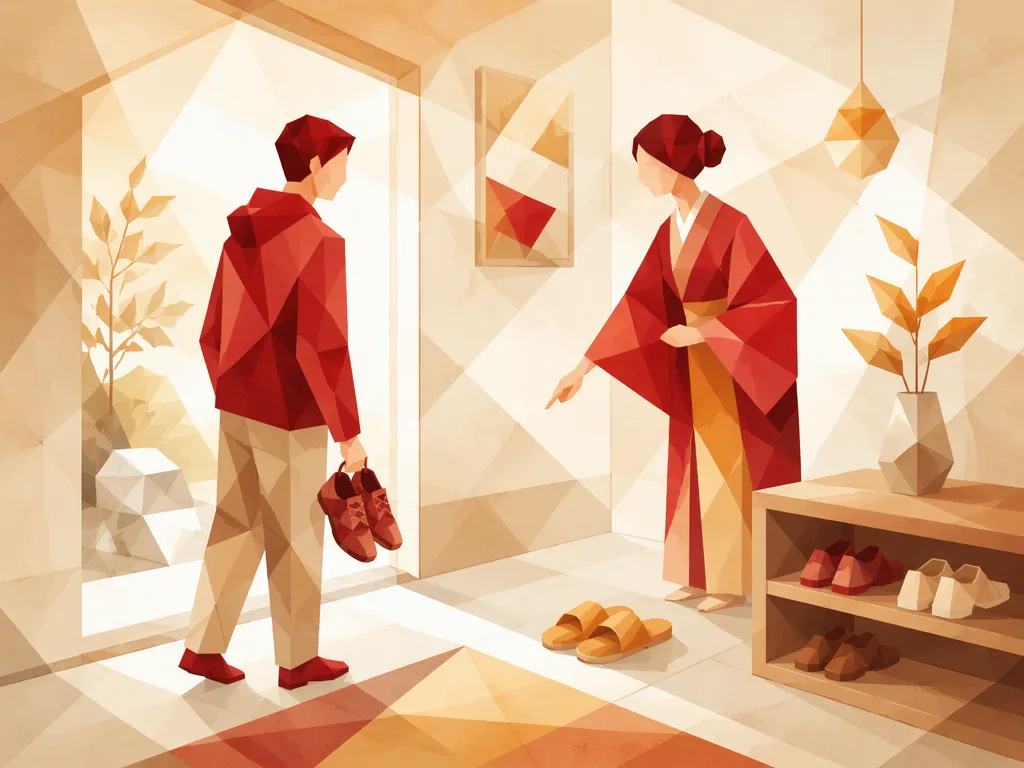
¿Qué espera el anfitrión que haga el visitante?
At a home in Kyoto, Japan, the host points to a shoe rack beside the front door and offers the visitor a pair of indoor slippers.
- Change out of outdoor shoes.
- Wear the slippers over outdoor shoes.
- Keep the slippers for a walk outside.
Show solution
- Change out of outdoor shoes.
En muchos hogares japoneses, dejar los zapatos que se usan afuera en la entrada ayuda a mantener limpios los pisos interiores.
-
2. Elige la respuesta correcta.
¿Dónde debe esperar un cliente nuevo?
At a London bakery, one line serves three cashiers. The person at the front goes to whichever cashier becomes free next.
- Beside the cashier who looks fastest.
- In a new line behind one cashier.
- At the back of the shared line.
Show solution
- At the back of the shared line.
Una fila única permite que los clientes pasen con el siguiente cajero disponible sin tener que elegir una fila.
-
3. Elige la respuesta correcta.
¿Qué le sorprende al visitante sobre la cena?
Ben usually eats dinner at six. While visiting a family in Madrid, Spain, he learns that their evening meal normally begins at nine.
- The family eats dinner less often.
- The family eats dinner later.
- The family spends less time eating.
Show solution
- The family eats dinner later.
En España, se suele cenar más tarde de lo que esperan los visitantes, aunque cada hogar tiene su propia rutina.
-
4. Elige la respuesta correcta.
¿Para quién son los platos que están en el centro?
At a restaurant in Seoul, South Korea, friends order several dishes. They place them in the center and use serving spoons to put small portions on their own plates.
- Everyone at the table.
- Only the person who ordered them.
- Only people who have finished their meals.
Show solution
- Everyone at the table.
Los platos para compartir permiten que las personas disfruten de varios sabores sin pedir un plato principal por separado para cada persona.
-
5. Elige la respuesta correcta.
¿Qué costo adicional debe prever el visitante?
At a restaurant in Chicago, the menu says that a tip is not included. A local friend explains that guests usually leave extra money for the server.
- A deposit that the restaurant returns later.
- A fixed ticket price for entering the restaurant.
- A tip in addition to the meal price.
Show solution
- A tip in addition to the meal price.
Las prácticas relacionadas con las propinas varían según el lugar. Verificar si el servicio ya está incluido puede evitar pagarlo dos veces.
-
6. Elige la respuesta correcta.
¿Por qué la familia espera hasta la puesta del sol para comer?
During Ramadan, Sam visits a Muslim family in Morocco. The adults who are fasting do not eat or drink during daylight. They invite him to share their meal after sunset.
- They are not allowed to prepare food during daylight.
- Their daily fast ends at sunset.
- Visitors can enter their home only after dark.
Piensa en la diferencia entre preparar la comida y comerla.
Show solution
- Their daily fast ends at sunset.
La comida con la que se rompe el ayuno diario del Ramadán se llama iftar, y suele ser un momento para reunirse con otras personas.
-
7. Elige la respuesta correcta.
What affects the coffee price at this café?
At a café in Rome, Italy, the menu lists one price for drinking espresso while standing at the counter and a higher price for being served at a table.
- Whether the customer uses table service.
- Whether the customer visits in the morning.
- Whether the coffee is served hot.
A customer can order the same coffee in either place.
Show solution
- Whether the customer uses table service.
At some Italian cafés, table service costs more than counter service. The place where you drink can affect the bill.
-
8. Elige la respuesta correcta.
Why does the friend wait to return the call?
On a train in Tokyo, a sign asks passengers not to make phone calls. When a friend's phone rings, she silences it and calls back after getting off the train.
- Passengers must use station phones instead.
- Phone signals never work inside trains.
- She wants to avoid disturbing other passengers.
Consider why a shared space might have a rule about sound.
Show solution
- She wants to avoid disturbing other passengers.
Quiet-travel rules help people share a crowded space comfortably; they do not mean passengers dislike conversation.
-
9. Elige la respuesta correcta.
¿Qué debería hacer el visitante antes del domingo?
In Frankfurt, Germany, a visitor finds that the local supermarket closes every Sunday. The museum and a nearby café are open that day. The visitor needs food for the weekend.
- Visit the museum.
- Buy groceries.
- Meet a friend at the café.
¿Qué actividad depende del negocio que estará cerrado?
Show solution
- Buy groceries.
Muchas tiendas en Alemania cierran los domingos, mientras que algunos lugares para comer y disfrutar del tiempo libre permanecen abiertos.
-
10. Elige la respuesta correcta.
¿Por qué los dos eventos tienen diferentes reglas sobre la hora de llegada?
In Mexico City, Ana's office meeting starts exactly at eight. Her birthday invitation also says eight, but she tells friends that arriving a little later is fine.
- Work meetings and personal celebrations can have different expectations.
- Ana expects everyone to arrive late at both events.
- The birthday invitation gives the wrong starting time.
Piensa en el propósito de cada evento, no solo en su ubicación.
Show solution
- Work meetings and personal celebrations can have different expectations.
Las expectativas sobre la puntualidad pueden cambiar según la situación, incluso para la misma persona en la misma ciudad.
-
11. Elige la respuesta correcta.
What does the host's response mean?
At her birthday party in Osaka, Japan, the host thanks Eva for the wrapped gift and places it safely beside the other presents. The host says, "I'll open these after everyone has gone."
- She does not want to accept Eva's gift.
- She needs Eva to explain the gift before accepting it.
- She plans to open the gifts later rather than in front of guests.
Notice that the host thanks Eva and keeps the gift safe.
Show solution
- She plans to open the gifts later rather than in front of guests.
Gift-opening customs vary. Waiting to open a present does not necessarily show a lack of interest.
-
12. Elige la respuesta correcta.
¿Dónde es bienvenido el regateo?
At a market stall in Marrakesh, Morocco, a seller invites visitors to suggest a price. A nearby shop displays a sign saying, "All prices are fixed."
- At both the stall and the shop.
- At the stall, but not at the shop.
- At the shop, but not at the stall.
Compara una invitación a proponer un precio con un aviso de precio fijo.
Show solution
- At the stall, but not at the shop.
Las costumbres de compra pueden variar entre negocios de la misma calle. No en todas partes se espera que se regatee.
-
13. Elige la respuesta correcta.
¿Qué indica el paso hacia atrás de la colega?
During a friendly conversation, Lee's new colleague steps back slightly. She says, "I'm enjoying our chat. I just feel more comfortable with a little more space between us."
- She prefers a greater distance while talking.
- She wants to end the conversation.
- She is having trouble hearing Lee.
Sus palabras explican el movimiento sin rechazar la conversación.
Show solution
- She prefers a greater distance while talking.
El espacio personal que resulta cómodo varía de una persona a otra. Un pequeño paso hacia atrás no indica automáticamente desagrado.
-
14. Elige la respuesta correcta.
What does the guest most likely mean?
A host invites a guest to dinner. The guest replies, "That may be difficult. I have another appointment at that time." A local friend explains that people here often soften a refusal to sound polite.
- The guest has accepted the invitation.
- The guest wants to bring another person.
- The guest probably cannot attend.
Consider both the polite wording and the other appointment.
Show solution
- The guest probably cannot attend.
A refusal can be expressed indirectly. Gentle wording may still communicate that someone is unavailable.
-
15. Elige la respuesta correcta.
Why do the teammates misunderstand each other?
On an international team, Mina pauses to think before answering. Omar starts speaking because, in his culture, a long pause means nobody wants to answer. Mina feels that he has interrupted her.
- They disagree about the subject of the discussion.
- They give different meanings to the same pause.
- They both believe that a pause ends the discussion.
Compare what Mina is doing with what Omar thinks the silence means.
Show solution
- They give different meanings to the same pause.
Silence can signal thinking or an opportunity for someone else to speak. Talking about these habits can prevent misunderstandings.