


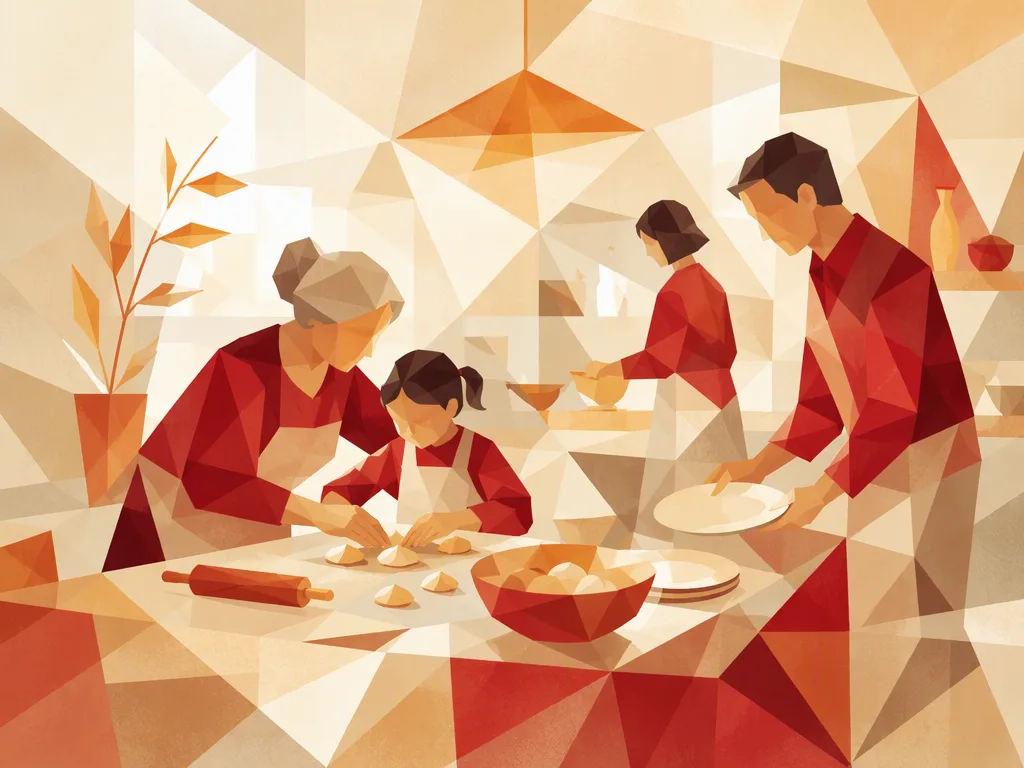
Tradiciones familiares
Explora las comidas, las celebraciones y las rutinas cotidianas que unen a las familias.
Preview
Questions with solutions-
1. Elige la respuesta correcta.
¿Qué suele desayunar esta familia los domingos?
Dad: Your brother is making pancakes.
Mia: Great! Our usual Sunday breakfast.- Eggs on toast.
- Pancakes.
- Oatmeal.
Show solution
- Pancakes.
“Our usual” indica que este desayuno forma parte de la rutina familiar.
-
2. Elige la respuesta correcta.
¿Qué hará Noah para ayudar?
Grandma: I'll bake the pie. Could you set the table, Noah?
Noah: Sure. Do we need six plates?- Prepare the table for the meal.
- Make the dessert.
- Wash the dishes after dinner.
Show solution
- Prepare the table for the meal.
Poner la mesa significa colocar los platos y otras cosas que las personas necesitan para una comida.
-
3. Elige la respuesta correcta.
¿Qué pasa justo antes de que Maya abra sus regalos?
Maya: Can I open my birthday presents now?
Dad: After we take our family photo, as always.- The family eats birthday cake.
- The family sings a birthday song.
- The family takes a photo.
Show solution
- The family takes a photo.
“After” deja claro el orden: la foto va antes de los regalos.
-
4. Escucha y escribe la respuesta.
Un miembro de la familia habla sobre un picnic.
Show solution
- My aunt brings her homemade bread to every family picnic.
“Homemade” describe algo hecho en casa en lugar de comprado listo para comer.
-
5. Elige la respuesta correcta.
¿Cómo aprendió mamá a preparar esta sopa?
Sam: This soup tastes just like Grandma's.
Mom: She showed me how to make it when I was your age.- She watched a cooking video.
- Her mother taught her.
- She found it in a cookbook.
Show solution
- Her mother taught her.
La abuela le enseñó la receta a mamá, lo que ayudó a la familia a conservar una tradición culinaria.
-
6. Elige la respuesta correcta.
¿Qué espera el anfitrión que traiga el invitado?
Guest: Should I bring a gift to your family dinner?
Host: You don't need to. Just bring a dish we can all share.- A wrapped present for the host.
- A plate to use during dinner.
- Some food for everyone to enjoy.
Show solution
- Some food for everyone to enjoy.
Aquí, “a dish” significa comida preparada, no un plato vacío.
-
7. Elige la respuesta correcta.
¿Cuándo empezará la familia a cenar hoy?
Mom: We usually eat at six, but Uncle Joe can't get here until seven.
Dad: We'll wait for him before we start.- When Uncle Joe arrives at seven.
- At six, as usual.
- Half an hour before Uncle Joe arrives.
Show solution
- When Uncle Joe arrives at seven.
“We'll wait for him” muestra que incluir al invitado importa más que la hora habitual de la cena.
-
8. Elige la respuesta correcta.
How will the family respond to Ava's needs?
Ava: I don't eat meat anymore.
Uncle: We'll still make our usual beef stew, but we'll cook a vegetable dish for you too.- They will ask Ava to eat the beef stew.
- They will make an extra dish that Ava can eat.
- They will stop making beef stew for everyone.
Show solution
- They will make an extra dish that Ava can eat.
The family keeps its usual meal and adds another choice so Ava can join in.
-
9. Escucha y escribe la respuesta.
Un hablante describe un cambio en una celebración familiar.
Show solution
- We used to celebrate at my uncle's house, but now we meet at ours.
Aquí, “Ours” significa “our house”, por lo que el hablante no necesita repetir “house”.
-
10. Elige la respuesta correcta.
¿Por qué el hijo sugiere una llamada?
Dad: Your sister can't come home this year.
Son: Then let's call her when we sit down to dinner.- To ask his sister to arrive before dinner.
- To get his sister's recipe for the meal.
- To include his sister even though she is far away.
Show solution
- To include his sister even though she is far away.
Una llamada permite que alguien que está lejos participe en un momento familiar.
-
11. Elige la respuesta correcta.
¿Qué razón da el abuelo para conservar los adornos viejos?
Grandpa: These decorations are old, but I don't want new ones. We made them together when your mom was little.
- They remind him of time spent with his family.
- New decorations cost too much.
- He thinks old decorations always look better.
Show solution
- They remind him of time spent with his family.
Un objeto viejo puede ser valioso por los recuerdos familiares que guarda.
-
12. Elige la respuesta correcta.
¿Qué le ofrece la tía a Ben?
Aunt: We always play cards after dinner.
Ben: I don't know the game.
Aunt: Sit beside me for the first round. I'll explain as we play.- A different game that everyone already knows.
- Help learning the game while he takes part.
- A chance to play after everyone else finishes.
Show solution
- Help learning the game while he takes part.
“As we play” significa que la explicación y el juego ocurrirán al mismo tiempo.
-
13. Elige la respuesta correcta.
How does Dad suggest changing the picnic plan?
Mom: Our family picnic is planned for Sunday, but the forecast says rain.
Dad: Let's eat at home instead. Everyone can bring the food they planned to make.- Change the day, but keep the outdoor location.
- Keep the location, but invite fewer people.
- Change the location, but keep the shared meal.
Notice what changes and what stays the same.
Show solution
- Change the location, but keep the shared meal.
The weather changes where they gather, but everyone can still share the planned food.
-
14. Elige la respuesta correcta.
What holiday plan does Max suggest?
Ella: Are we spending the holidays with my parents again?
Max: We were there last year. Let's visit mine this year and yours next year.- Take turns visiting each family in different years.
- Visit both families on the same day.
- Keep visiting Ella's parents every year.
Notice who “mine” and “yours” refer to.
Show solution
- Take turns visiting each family in different years.
Taking turns can help a couple share holiday time between their two families.
-
15. Elige la respuesta correcta.
What matters most to Dad about this tradition?
Lena: Now that we've moved, we can't walk along the river like we used to on New Year's Day.
Dad: We can walk in the park here. The important part is starting the year together.- Returning to their old town every year.
- Spending time together, even in a different place.
- Following exactly the same walking route.
Focus on what Dad calls important.
Show solution
- Spending time together, even in a different place.
A tradition can keep its meaning even when some details change.