


Lugares famosos: más allá de la postal
Explora lugares emblemáticos y descubre detalles que las fotos no siempre muestran. Sigue las pistas, desde sitios conocidos hasta historias sorprendentes.
Preview
Questions with solutions-
1. Elige la respuesta correcta.
¿Qué monumento es este?
A tall iron tower rises above Paris. It was built for a world's fair.
- The Eiffel Tower
- The Leaning Tower of Pisa
- Big Ben
Show solution
- The Eiffel Tower
La torre se pinta regularmente para proteger su hierro de la oxidación.
-
2. Elige la respuesta correcta.
¿Qué ciudad corresponde a esta descripción?
In this Italian city, canals run between buildings. Boats carry people along many of its main routes.
- Rome
- Florence
- Venice
El agua es una parte importante de los desplazamientos cotidianos aquí.
Show solution
- Venice
Los autobuses acuáticos públicos de Venecia transportan a residentes y visitantes, mientras que las góndolas ofrecen otro tipo de paseo en barco.
-
3. Elige la respuesta correcta.
¿Qué sostiene la estatua en la mano que tiene levantada?
The Statue of Liberty stands on an island in New York Harbor. She wears a crown and raises one arm.
- A sword
- A torch
- A flag
Show solution
- A torch
Su superficie verde se debe a cambios en el cobre después de años de contacto con el aire y la humedad.
-
4. Elige la respuesta correcta.
What were the largest pyramids mainly built as?
The pyramids at Giza stand near Cairo. They were built for rulers of ancient Egypt.
- Tombs for rulers
- Homes for rulers
- Places for public worship
Think about ancient Egyptian beliefs about life after death.
Show solution
- Tombs for rulers
Ancient Egyptians believed that a ruler's life continued after death, so burial places were very important.
-
5. Elige la respuesta correcta.
¿Qué descripción se ajusta mejor al uso del edificio?
The Sydney Opera House presents plays, concerts, and dance, as well as opera.
- A venue used only for opera
- A center for several performing arts
- A museum mainly about musical instruments
Show solution
- A center for several performing arts
Su nombre solo cuenta parte de la historia. El edificio también alberga varios espacios diferentes para espectáculos.
-
6. Elige la respuesta correcta.
¿Cuál era su uso principal cuando abrió por primera vez?
The Colosseum in ancient Rome had rows of seats around a large central area.
- Meetings of Roman lawmakers
- Daily shopping at market stalls
- Large public shows
Los asientos permitían que una gran multitud observara los eventos.
Show solution
- Large public shows
Los espectáculos incluían peleas entre gladiadores y eventos con animales salvajes.
-
7. Elige la respuesta correcta.
What was the Taj Mahal built to be?
An emperor ordered the construction of this grand white marble building after the death of his wife.
- A memorial and burial place
- A palace for everyday royal life
- A fort to protect the city
Consider the event that led the emperor to build it.
Show solution
- A memorial and burial place
Both the emperor and his wife are buried there. Its gardens and pools add to the site's sense of balance.
-
8. Elige la respuesta correcta.
¿Cómo se crearon los rostros del monte Rushmore?
The huge faces are part of a natural mountain. Workers used tools and controlled explosions to shape them.
- By joining separate stone blocks
- By cutting rock away from the mountain
- By pouring concrete into large molds
La propia montaña proporcionó el material.
Show solution
- By cutting rock away from the mountain
Se retiró gran parte de la roca con explosivos antes de que los trabajadores dieran forma a los detalles más finos.
-
9. Elige la respuesta correcta.
¿Qué descripción corresponde a la historia de la Gran Muralla?
Different rulers built separate walls over many centuries. Some sections were later joined, repaired, or replaced.
- One continuous wall built in a single project
- A modern wall built to look like an ancient one
- A network built and changed over centuries
Fíjate en cuántos grupos y períodos estuvieron involucrados.
Show solution
- A network built and changed over centuries
Los constructores usaban materiales locales, por lo que las distintas secciones pueden estar hechas de tierra, ladrillo o piedra.
-
10. Elige la respuesta correcta.
¿Qué función útil cumplen estas ramas?
Inside Barcelona's Sagrada Família, tall columns divide into branches near the ceiling, like trees.
- They carry rainwater from the roof to the floor.
- They help support the roof above.
- They form stairs for visitors to climb.
Piensa en lo que normalmente sostiene una columna.
Show solution
- They help support the roof above.
El arquitecto Antoni Gaudí solía usar ideas de la naturaleza en sus diseños.
-
11. Elige la respuesta correcta.
When is this color especially helpful for people on boats?
The Golden Gate Bridge is orange-red, not gold. Its color helps it stand out against the surrounding sea and sky.
- When fog makes the bridge difficult to see
- When strong winds shake their boats
- When low tide leaves less water beneath them
Consider which problem a visible color can help with.
Show solution
- When fog makes the bridge difficult to see
The bridge takes its name from the Golden Gate, the waterway it crosses—not from its paint.
-
12. Elige la respuesta correcta.
¿Cómo ayudaron estas terrazas a los agricultores?
Machu Picchu stands on steep mountain slopes. Its farming terraces form flat steps supported by stone walls.
- They provided enclosed rooms for growing crops.
- They provided floating gardens for growing crops.
- They provided level ground for growing crops.
Es más difícil cultivar en una pendiente pronunciada que en una superficie plana.
Show solution
- They provided level ground for growing crops.
Las terrazas también ayudaron a drenar el agua de lluvia y a evitar que el suelo fuera arrastrado cuesta abajo.
-
13. Elige la respuesta correcta.
¿Qué muestra esta historia sobre el templo?
Angkor Wat in Cambodia was built as a Hindu temple. Later, it became an important place for Buddhist worship.
- A religious site can serve different traditions over time.
- A religious site's original use can never change.
- Every Buddhist temple was originally Hindu.
La historia describe un lugar, no una regla para todos los templos.
Show solution
- A religious site can serve different traditions over time.
Algunos tallados todavía muestran escenas de relatos hindúes, conservando indicios del uso anterior del templo.
-
14. Elige la respuesta correcta.
What did the engineers aim to do?
Engineers made the Leaning Tower of Pisa safer. They reduced its lean slightly but did not make it perfectly straight.
- Make it completely straight, whatever the change in appearance
- Increase its lean to attract more visitors
- Keep it stable while preserving its famous appearance
Both safety and the tower's special character mattered.
Show solution
- Keep it stable while preserving its famous appearance
The lean began because the ground beneath the tower settled unevenly.
-
15. Elige la respuesta correcta.
¿Qué deben entender los visitantes antes de cruzar la bahía a pie?
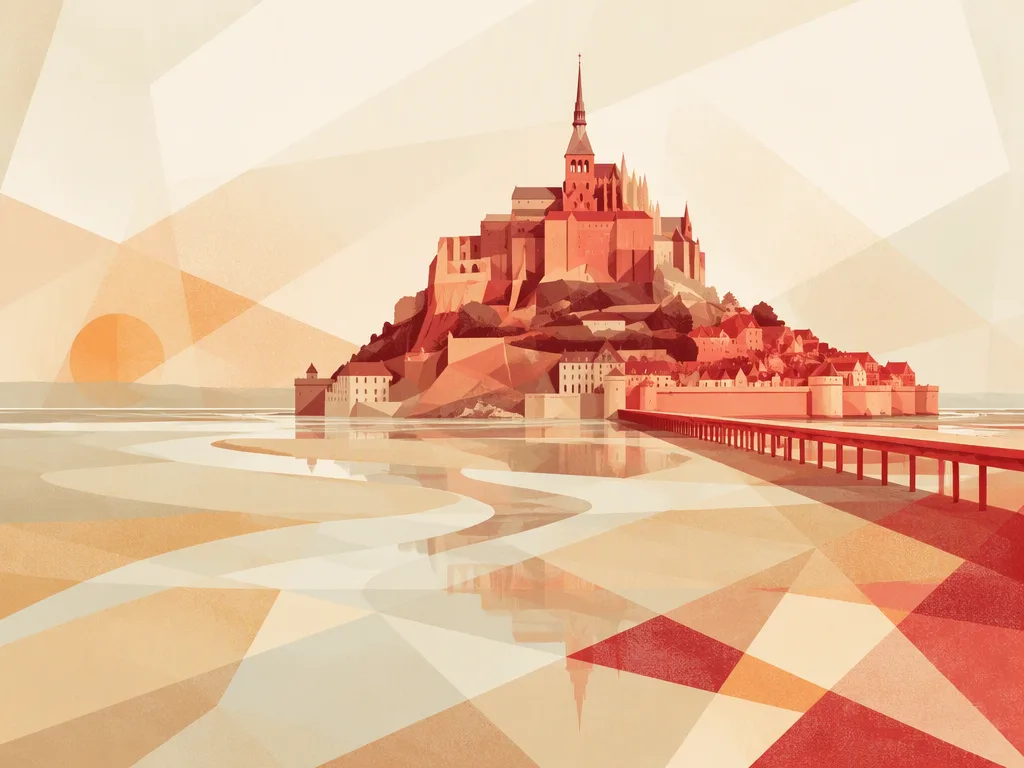
At Mont-Saint-Michel, the sea moves far out at low tide and returns at high tide. Some areas of sand look firm but are not.
- Low tide makes every route safe until evening.
- The sea can return, and the ground may be unsafe.
- A dry surface means the sand below is firm.
Piensa tanto en los cambios del nivel del agua como en lo que hay bajo la superficie.
Show solution
- The sea can return, and the ground may be unsafe.
Los guías locales planifican los cruces según las mareas y saben qué zonas de la bahía deben evitarse.