


Cómo se comunican los animales
Descubre cómo los animales envían mensajes mediante sonidos, olores, movimientos y luz, y qué pueden significar esos mensajes.
Preview
Questions with solutions-
1. Elige la respuesta correcta.
¿Qué es lo más probable que esté comunicando el perro?
A person reaches toward a dog's food bowl. The dog becomes stiff and growls.
- Stay away from my food.
- Let's play together.
- Follow me somewhere else.
Presta atención tanto al sonido como al cuerpo del perro.
Show solution
- Stay away from my food.
Un gruñido puede ser una advertencia. Interpretar la posición del cuerpo junto con el sonido ayuda a las personas a entender el mensaje de un perro.
-
2. Elige la respuesta correcta.
¿Qué están pidiendo los polluelos?
A parent bird arrives at the nest with a worm. The chicks open their mouths wide and call loudly.
- Help building a nest
- Food from the parent
- Protection from the parent bird
Show solution
- Food from the parent
Los polluelos usan tanto sus llamados como sus bocas abiertas para pedir comida. Sus señales pueden ayudar a uno de sus padres a decidir a qué polluelo alimentar.
-
3. Elige la respuesta correcta.
¿Cómo puede el aullido ayudar a un grupo de lobos?
Wolves may howl when members of their group are far apart. A howl can travel much farther than a quiet sound.
- It keeps their location secret.
- It leaves a scent trail for others.
- It helps members stay in contact.
Piensa en la distancia entre los lobos.
Show solution
- It helps members stay in contact.
El aullido permite a los lobos comunicarse sin estar cerca unos de otros. También puede ayudar a los miembros del grupo que están separados a encontrarse.
-
4. Completa el espacio en blanco.
Ants can mark a path with chemicals from their bodies. Other ants follow this path using their ___.
- sense of hearing
- sense of smell
- sense of sight
El mensaje es químico, no un sonido ni una imagen.
Show solution
Ants can mark a path with chemicals from their bodies. Other ants follow this path using their sense of smell.
Las hormigas detectan estos mensajes químicos con sus antenas. Un rastro puede guiar a muchas hormigas hacia la misma fuente de alimento.
-
5. Elige la respuesta correcta.
¿Qué información les da la danza a las otras abejas?
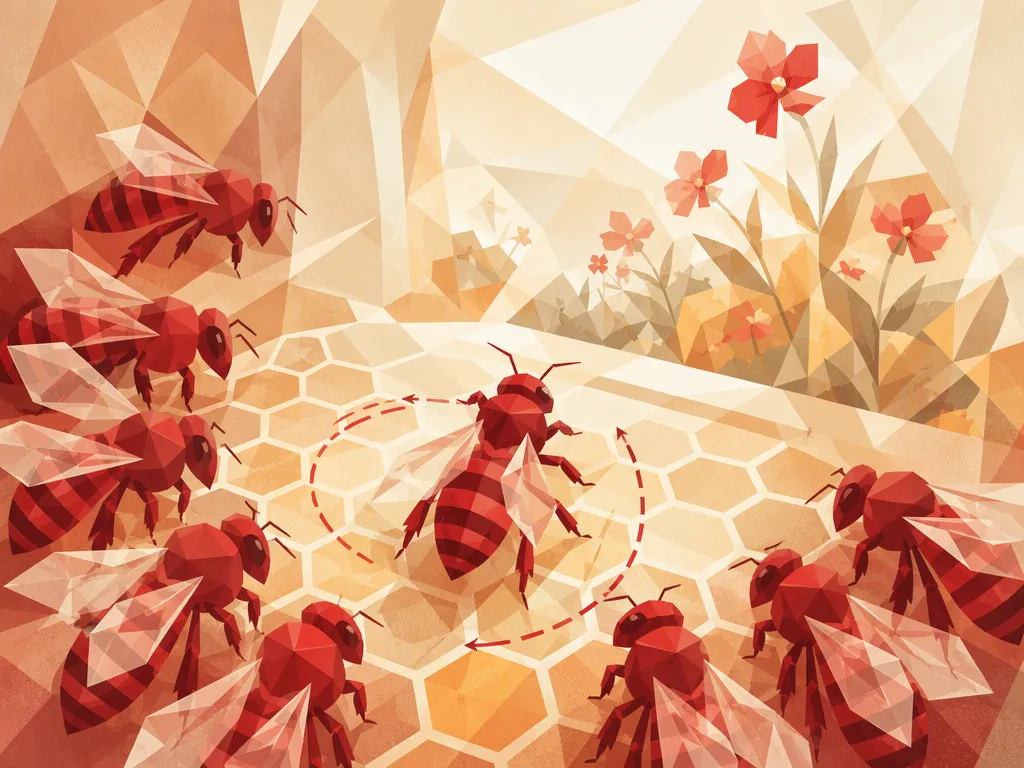
A honeybee finds flowers with nectar, a sweet liquid. Back at the hive, it performs a waggle dance.
- Where to find the flowers
- How to turn nectar into honey
- How to carry nectar while flying
La abeja ha encontrado algo útil fuera de la colmena.
Show solution
- Where to find the flowers
La danza proporciona información sobre la dirección y la distancia. Las otras abejas pueden usarla para llegar a la fuente de alimento.
-
6. Elige la respuesta correcta.
¿Por qué es importante el patrón de destellos?
Many kinds of fireflies use light flashes to find mates. Different kinds have different flashing patterns.
- It shows where another firefly found food.
- It reveals another firefly's exact age.
- It helps them recognize a mate of the same kind.
No todas las luciérnagas son del mismo tipo.
Show solution
- It helps them recognize a mate of the same kind.
Importa cuándo se producen los destellos, no solo la luz en sí. Una respuesta que coincida puede ayudar a dos luciérnagas a encontrarse.
-
7. Completa el espacio en blanco.
Cuttlefish use changing patterns on their bodies to signal to other cuttlefish. They create these patterns by changing their ___.
- swimming speed
- skin color
- body temperature
Estos mensajes son visibles en la superficie del animal.
Show solution
Cuttlefish use changing patterns on their bodies to signal to other cuttlefish. They create these patterns by changing their skin color.
Pequeñas partes de la piel con color pueden expandirse o contraerse. Esto permite que las sepias cambien su apariencia rápidamente.
-
8. Elige la respuesta correcta.
¿Qué información útil proporcionan estas diferentes llamadas?
Eagles hunt from the air, while leopards approach on the ground. Vervet monkeys use different alarm calls for these two animals.
- The type of danger nearby
- The number of monkeys in the group
- The age of the monkey calling
Distintos peligros pueden requerir distintas respuestas.
Show solution
- The type of danger nearby
Las llamadas ayudan a los monos a responder a una amenaza específica. Una forma de escapar de un depredador terrestre puede no ser segura frente a un águila.
-
9. Completa el espacio en blanco.
Bottlenose dolphins have special whistles linked to their identity. Other dolphins can recognize them by these whistles, which work a little like ___.
- maps
- warnings
- names
Piensa en cómo reconocemos a una persona en particular.
Show solution
Bottlenose dolphins have special whistles linked to their identity. Other dolphins can recognize them by these whistles, which work a little like names.
Los delfines pueden imitar el silbido especial de otro delfín cuando llaman a ese animal. Sus silbidos hacen más que anunciar que hay un delfín cerca.
-
10. Elige la respuesta correcta.
¿Cómo pueden ayudar estas llamadas a las crías de cocodrilo?
Young crocodiles call from inside their eggs shortly before hatching. Their mother may then dig open the nest.
- They teach the mother where to lay new eggs.
- They bring help when the young are ready to come out.
- They tell the mother that the young have reached the water.
Las crías todavía están dentro de sus huevos.
Show solution
- They bring help when the young are ready to come out.
La comunicación puede comenzar antes de que un animal salga del huevo. Estas llamadas también pueden ayudar a las crías de cocodrilo a salir del huevo casi al mismo tiempo.
-
11. Elige la respuesta correcta.
¿Qué ofrece el baile del pez limpiador?
A small cleaner fish performs a repeated dance near a larger fish. The larger fish stops and lets it remove tiny animals called parasites from its skin.
- A cleaning service
- A challenge to fight
- Directions to a food source
Show solution
- A cleaning service
El pez limpiador consigue alimento, mientras que el pez más grande se libera de los parásitos no deseados. La señal ayuda a dos tipos diferentes de peces a cooperar.
-
12. Elige la respuesta correcta.
Una persona que está cerca no oye nada. ¿Qué puede ser cierto aun así?
Elephants make very low calls that can travel far. Some calls are below the range that human ears can detect.
- The elephant is definitely not making any sound.
- Any call the elephant makes must be too quiet to travel far.
- The elephant may be calling outside the person's hearing range.
El tono de un sonido y su volumen son cosas distintas.
Show solution
- The elephant may be calling outside the person's hearing range.
Un llamado puede ser fuerte, pero demasiado grave para el oído humano. Lo que para nosotros es silencio no siempre lo es para otro animal.
-
13. Elige la respuesta correcta.
¿Qué muestra esto sobre la comunicación de las ballenas?
Male humpback whales can copy songs they hear from other whales. Over time, a new song can spread between groups.
- Every whale keeps the same song throughout its life.
- Some signals can be learned from other animals.
- Whales can learn songs only from their parents.
Piensa en cómo una nueva canción llega a otro grupo.
Show solution
- Some signals can be learned from other animals.
Aprender de otros puede crear tradiciones compartidas. Las canciones de las ballenas pueden cambiar a medida que se difunden nuevos patrones.
-
14. Elige la respuesta correcta.
¿Cómo puede la falsa alarma ayudar al drongo?
A bird called a drongo sometimes copies another animal's alarm call when no danger is present. Nearby animals leave their food and hide.
- It can take the food they leave behind.
- It can follow them to a real hunter.
- It can learn where they originally found the food.
¿Qué queda disponible cuando los otros animales huyen?
Show solution
- It can take the food they leave behind.
Las señales de los animales no siempre son honestas. Los drongos pueden usar falsas advertencias para robar comida, aunque también dan advertencias reales.
-
15. Elige la respuesta correcta.
¿Quién se beneficia de este intercambio?
A bird called a honeyguide calls and moves from tree to tree. People follow it to a wild bees' nest. After they collect honey, the bird eats some of the wax left behind.
- Only the people
- Only the honeyguide
- Both the people and the honeyguide
Compara lo que cada parte consigue comer.
Show solution
- Both the people and the honeyguide
La comunicación puede favorecer la cooperación entre los seres humanos y los animales silvestres. El pájaro indicador obtiene acceso a la cera, que es difícil de alcanzar en un nido cerrado.