


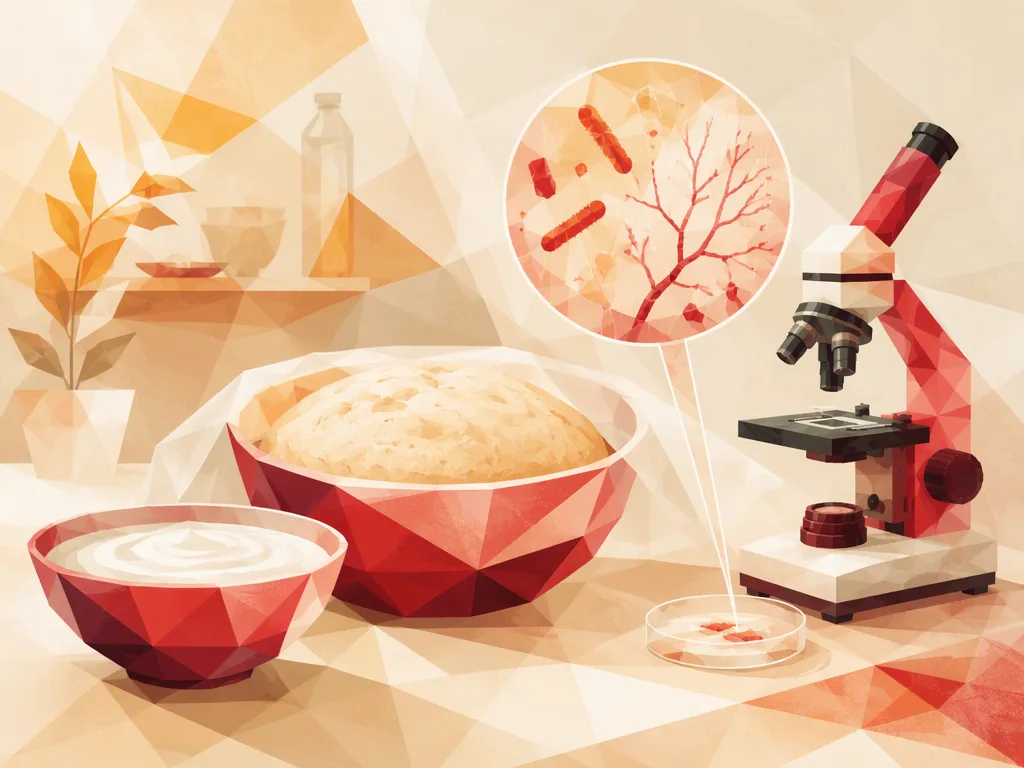
Microbios: el mundo invisible
Descubre cómo los microbios influyen en los alimentos, la salud y el medio ambiente, desde el aumento de volumen de la masa del pan hasta la resistencia a los antibióticos.
Preview
Questions with solutions-
1. Elige la respuesta correcta.
¿Qué hacen las bacterias que ayuda a que el yogur se vuelva agrio y espeso?
When certain live bacterial cultures are added to milk under suitable conditions, yogurt forms.
- They turn milk sugar into acid.
- They release gas that makes the milk rise.
- They remove fat from the milk.
Piensa en lo que le da al yogur su sabor agrio.
Show solution
- They turn milk sugar into acid.
Las bacterias producen ácido láctico. Este ácido también cambia la forma en que interactúan las proteínas de la leche, lo que ayuda a que el yogur se espese.
-
2. Elige la respuesta correcta.
¿A qué grupo pertenece el moho del pan?
A fuzzy patch of mold has appeared on a slice of bread.
- Bacteria
- Fungi
- Viruses
El moho pertenece al mismo grupo general que los hongos.
Show solution
- Fungi
Los mohos son hongos que suelen crecer formando redes de filamentos diminutos. La mancha visible contiene muchos de estos filamentos.
-
3. Elige la respuesta correcta.
¿Cómo ayuda esta rutina a reducir los microbios en tus manos?
You rub your hands thoroughly with soap and water, then rinse them under running water.
- It kills every microbe and makes the hands completely sterile.
- It removes visible dirt but cannot reduce the number of microbes.
- It loosens dirt and microbes so the water can carry them away.
Considera lo que sucede durante el enjuague.
Show solution
- It loosens dirt and microbes so the water can carry them away.
El lavado de manos no necesita matar todos los microbios para ser útil. Eliminar los microbios también reduce la probabilidad de propagarlos.
-
4. Elige la respuesta correcta.
¿Qué causa principalmente que la masa se expanda?
Bread dough containing yeast rises while resting, before it goes into the oven.
- Gas released by the yeast becomes trapped in the dough.
- Heat from the yeast turns the dough's water into steam.
- Yeast cells absorb water and become large enough to stretch the dough.
Piensa en las pequeñas bolsas de aire dentro de una rebanada de pan.
Show solution
- Gas released by the yeast becomes trapped in the dough.
La levadura produce dióxido de carbono al consumir azúcares. La masa atrapa este gas y forma burbujas que hacen que aumente de volumen.
-
5. Elige la respuesta correcta.
¿Cómo ayudan estos microbios a devolver los nutrientes al suelo?
A compost pile contains fallen leaves, food scraps, bacteria, and fungi.
- They turn the dead material into seeds for new plants.
- They break down the dead material, releasing nutrients.
- They preserve the dead material, keeping its nutrients sealed inside.
Considera por qué las hojas originales se vuelven difíciles de reconocer.
Show solution
- They break down the dead material, releasing nutrients.
La descomposición recicla los nutrientes de la materia que alguna vez estuvo viva. Sin los descomponedores, la materia muerta se acumularía y muchos nutrientes seguirían sin estar disponibles.
-
6. Elige la respuesta correcta.
¿Qué afirmación explica por qué los alimentos refrigerados solo pueden almacenarse de forma segura durante un tiempo limitado?
Leftovers are cooled promptly and stored in a refrigerator.
- Refrigeration kills all microbes, but the food creates new ones.
- Refrigeration makes all bacteria harmless without affecting their growth.
- Refrigeration slows microbial growth but does not stop every microbe from growing.
Hacer que un proceso sea más lento es diferente de detenerlo por completo.
Show solution
- Refrigeration slows microbial growth but does not stop every microbe from growing.
Algunos microbios pueden crecer a las temperaturas del refrigerador. Mantener los alimentos fríos reduce el riesgo, pero no los hace estériles.
-
7. Elige la respuesta correcta.
Which environment would allow a virus to multiply?
Unlike bacteria, viruses cannot make copies of themselves using nutrients alone.
- Living cells that the virus can infect
- A sterile sugar solution containing no cells
- An empty container supplied with warmth and oxygen
A virus needs more than food and suitable temperatures.
Show solution
- Living cells that the virus can infect
Viruses depend on machinery inside suitable host cells to produce new viruses. They cannot multiply independently.
-
8. Elige la respuesta correcta.
¿Por qué los antibióticos no tratarían la causa de este resfriado?
A clinician diagnoses a cold caused by a virus and finds no bacterial infection.
- Antibiotics work against this virus only after a fever develops.
- Antibiotics target bacteria, not the virus causing the cold.
- Antibiotics work against this virus only after symptoms become severe.
El tipo de microbio importa más que la gravedad de los síntomas.
Show solution
- Antibiotics target bacteria, not the virus causing the cold.
Muchos antibióticos atacan estructuras o procesos bacterianos que los virus no tienen. Una infección bacteriana distinta requeriría su propia evaluación.
-
9. Elige la respuesta correcta.
¿Qué muestra este ejemplo sobre las bacterias en el cuerpo?
A healthy adult's gut contains a large community of bacteria. Some help break down dietary fiber.
- Bacteria are useful only after they have caused an infection.
- A healthy gut must eventually remove all its bacteria.
- The presence of bacteria does not automatically mean someone is ill.
Considera la diferencia entre un microbio residente y un microbio que causa enfermedades.
Show solution
- The presence of bacteria does not automatically mean someone is ill.
Muchos microbios viven normalmente dentro del cuerpo o en su superficie. Sus efectos dependen de factores como su tipo, su ubicación y la salud de la persona.
-
10. Elige la respuesta correcta.
What does the normal smell tell you about the chicken's safety?
Some cooked chicken smells normal, but no one knows how long it has been left at room temperature.
- It does not rule out harmful microbes or their toxins.
- It confirms that cooking killed every harmful bacterium.
- It guarantees the chicken will be safe after reheating.
Not every food safety problem produces an obvious warning.
Show solution
- It does not rule out harmful microbes or their toxins.
Some harmful microbes and toxins cause no noticeable change in smell or appearance. Reheating also does not reliably destroy every toxin.
-
11. Elige la respuesta correcta.
¿Cómo puede ayudar esta preparación durante una infección posterior?
A vaccine prepares the immune system to recognize a particular virus before a person encounters that virus.
- The vaccine stays in the blood and directly kills every future virus.
- Immune memory can help the body respond more quickly.
- The body no longer needs an immune response because exposure is blocked.
Piensa en la ventaja de reconocer algo con lo que ya te has encontrado antes.
Show solution
- Immune memory can help the body respond more quickly.
La vacunación puede reducir el riesgo de enfermedad grave incluso cuando no previene todas las infecciones. La protección no requiere que la vacuna en sí permanezca en la sangre.
-
12. Elige la respuesta correcta.
¿Por qué las bacterias resistentes llegaron a representar una mayor proporción de la población?
A bacterial population contains a few bacteria that are already resistant to an antibiotic. After treatment and further growth, most bacteria in the population are resistant.
- The antibiotic taught every bacterium how to survive.
- The medicine weakened each time a bacterium encountered it.
- Resistant bacteria were more likely to survive and produce new bacteria.
Concéntrate en qué bacterias ya estaban presentes y cuáles sobrevivieron.
Show solution
- Resistant bacteria were more likely to survive and produce new bacteria.
El tratamiento puede favorecer a las bacterias que ya tienen resistencia y matar a las que no la tienen. La población bacteriana se vuelve más resistente; la persona no se vuelve resistente al medicamento.