


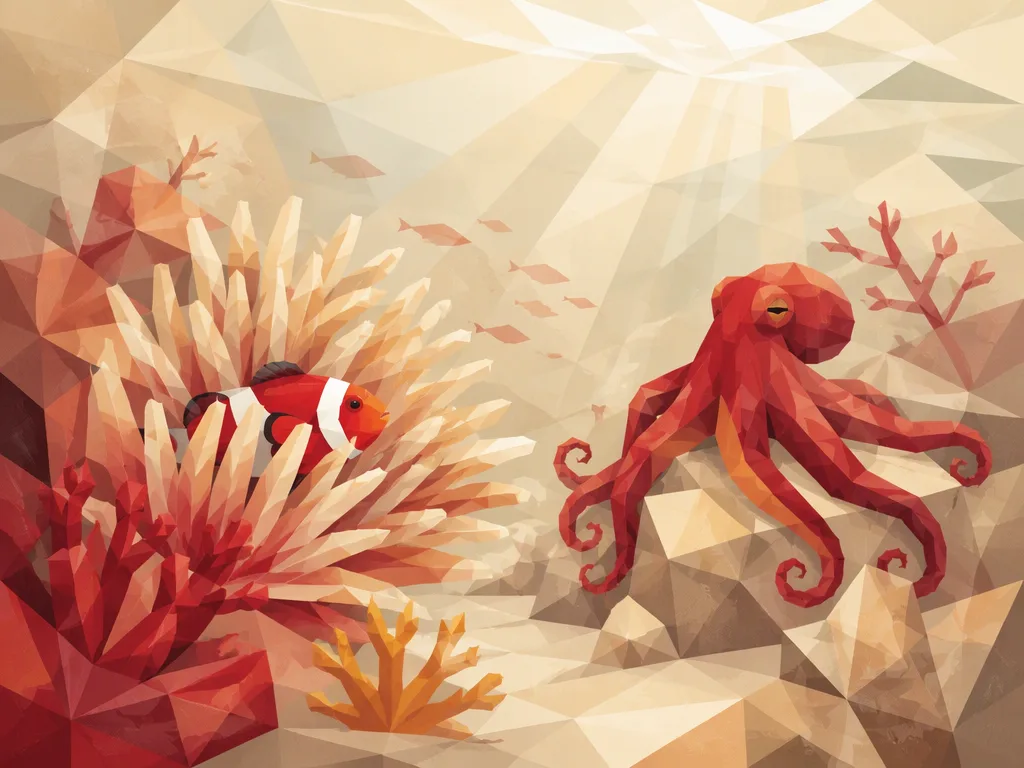
Misterios del océano que podemos explicar
Descubre cómo sobreviven los animales marinos, por qué el agua de mar se comporta como lo hace y qué conecta la vida bajo las olas.
Preview
Questions with solutions-
1. Elige la respuesta correcta.
¿Por qué debe la ballena volver a la superficie?
A whale can stay underwater for a long time, but it cannot stay there forever.
- To breathe air.
- To drink fresh water.
- To lay its eggs.
Las ballenas son mamíferos, como nosotros.
Show solution
- To breathe air.
Las ballenas tienen pulmones, no branquias. Respiran por aberturas en la parte superior de la cabeza.
-
2. Elige la respuesta correcta.
¿Qué causa principalmente estas mareas regulares?
At the beach, the water level rises and falls in a regular pattern. These changes are called tides.
- Rain falling into the ocean.
- The pull of the Moon and the Sun.
- Winds blowing toward the beach.
Piensa en objetos más allá de la Tierra.
Show solution
- The pull of the Moon and the Sun.
La Luna tiene un mayor efecto sobre las mareas porque está mucho más cerca de la Tierra que el Sol.
-
3. Elige la respuesta correcta.
¿Qué tipo de seres vivos construyen los arrecifes de coral?
Coral reefs may look like colorful underwater gardens, but their builders are not plants.
- Tiny sea plants.
- Tiny bacteria.
- Tiny sea animals.
Su forma parecida a un jardín puede engañarnos.
Show solution
- Tiny sea animals.
Los corales son animales que producen estructuras duras. Con el tiempo, estas estructuras forman arrecifes.
-
4. Elige la respuesta correcta.
¿Cómo ayuda la nube oscura al pulpo a escapar?
An octopus releases ink into the water, creating a dark cloud between itself and a hunting fish.
- It makes the octopus harder to see.
- It changes the color of the octopus's skin.
- It pushes the octopus forward faster.
Piensa en lo que ve el pez que está cazando.
Show solution
- It makes the octopus harder to see.
La tinta oculta la ruta de escape. Un pulpo también puede alejarse rápidamente al expulsar agua de su cuerpo.
-
5. Elige la respuesta correcta.
¿Qué sostiene el cuerpo de un tiburón en lugar de los huesos?
A shark has a strong skeleton, but it is not made of hard bone like ours.
- A hard shell outside its body.
- A flexible material like the one in our ears.
- Water filling its body, with no skeleton.
Toca la parte de tu oreja que se dobla.
Show solution
- A flexible material like the one in our ears.
Este material se llama cartílago. Es más ligero y más flexible que el hueso.
-
6. Elige la respuesta correcta.
¿Dónde pueden crecer bien los pastos marinos?
Seagrass is a flowering plant that lives in the ocean. It needs sunlight to make food.
- Deep below the reach of sunlight.
- Beneath a thick cover that blocks the light.
- In shallow water where light reaches the bottom.
Las raíces están en el fondo, pero las hojas necesitan luz.
Show solution
- In shallow water where light reaches the bottom.
Las praderas de pastos marinos también ofrecen a los peces jóvenes lugares para esconderse y crecer.
-
7. Elige la respuesta correcta.
¿Qué ayuda a proteger a los peces payaso de las picaduras?
Sea anemones have arms that sting. Clownfish can live safely among these arms.
- A special coating on their skin.
- Their orange color.
- Their ability to remove all the stinging cells.
La protección está en el cuerpo del pez.
Show solution
- A special coating on their skin.
El recubrimiento ayuda a evitar las picaduras. Los brazos de la anémona pueden entonces ofrecer refugio frente a otros peces.
-
8. Elige la respuesta correcta.
¿Cómo se benefician ambos peces?
A cleaner fish eats tiny unwanted animals from a larger fish's skin. The larger fish usually lets it continue.
- The larger fish gets food, and the cleaner fish gets cleaned.
- The cleaner fish gets food, and the larger fish gets cleaned.
- Both fish get food by eating from each other's skin.
Observa cuál de los peces está comiendo.
Show solution
- The cleaner fish gets food, and the larger fish gets cleaned.
Esta es una asociación en la que ambos animales se benefician. Algunos peces limpiadores trabajan en lugares de encuentro habituales.
-
9. Elige la respuesta correcta.
¿De dónde proviene la luz del pez?
In a part of the deep ocean with no sunlight, a fish produces a small glow.
- Sunlight stored in its scales.
- Light reflected from the ocean surface.
- A chemical reaction inside its body.
No hay luz externa que el pez pueda reflejar.
Show solution
- A chemical reaction inside its body.
Los seres vivos pueden producir luz mediante reacciones químicas. Algunos animales marinos usan esta luz para atraer alimento o enviar señales.
-
10. Elige la respuesta correcta.
¿Por qué aumenta la presión del agua con la profundidad?
As a diver swims deeper, the surrounding water presses more strongly on the diver's body.
- There is more water above the diver, pushing down.
- Deep water always contains more oxygen.
- Deep water is always hotter than surface water.
Imagina el peso del agua que está por encima del buzo.
Show solution
- There is more water above the diver, pushing down.
Los animales de las profundidades marinas tienen cuerpos adaptados a la alta presión. Muchos no pueden sobrevivir a un traslado repentino a la superficie.
-
11. Elige la respuesta correcta.
What does this tell us about the weight of sea ice?
A piece of sea ice floats at the ocean's surface instead of sinking.
- It weighs more than an equal volume of seawater.
- It weighs less than an equal volume of seawater.
- It weighs the same as an equal volume of seawater.
Compare ice and liquid water that take up the same amount of space.
Show solution
- It weighs less than an equal volume of seawater.
Water expands as it freezes. This helps explain why ice floats rather than sinking.
-
12. Elige la respuesta correcta.
¿Qué fuente de energía utilizan estos microbios para producir alimento?
Tiny living things called microbes live near hot springs on the deep ocean floor. They make food where sunlight never reaches.
- Sunlight passing through the ocean.
- Heat alone, without using any chemicals.
- Chemicals released by the hot springs.
Producir alimento no siempre requiere luz.
Show solution
- Chemicals released by the hot springs.
Estos microbios sustentan comunidades enteras de animales, incluidos los gusanos tubícolas y los mariscos.
-
13. Elige la respuesta correcta.
Why does the remaining water become saltier?
In a warm, dry bay, a lot of seawater evaporates: it turns into water vapor and enters the air.
- Water leaves, but most of the salt remains.
- Sunlight changes some of the water into salt.
- The rising water vapor brings extra salt into the bay.
Think about whether salt turns into vapor the way water does.
Show solution
- Water leaves, but most of the salt remains.
Salt can be collected by letting seawater evaporate in shallow pools.
-
14. Elige la respuesta correcta.
¿Cómo se vería normalmente un objeto de color rojo intenso a gran profundidad bajo el agua sin una lámpara?
Sunlight contains many colors. As it travels through seawater, red light disappears sooner than blue light.
- Brighter red, because depth makes red light stronger.
- Dark, because little red light reaches it.
- Bright red, because red objects produce their own light.
Un objeto solo puede reflejar la luz que le llega.
Show solution
- Dark, because little red light reaches it.
La lámpara de un buzo puede revelar colores que parecen desaparecer bajo el agua.
-
15. Elige la respuesta correcta.
What is most likely to happen to the kelp if many otters disappear?
Sea otters eat sea urchins. Sea urchins eat kelp, a large seaweed. In this area, otters are the main animals that eat the urchins.
- There may be more kelp because otters no longer eat it.
- The amount of kelp will stay the same because otters do not eat kelp.
- There may be less kelp because more urchins survive.
Follow the chain from otters to urchins to kelp.
Show solution
- There may be less kelp because more urchins survive.
Predators can help protect plants indirectly by controlling the animals that eat those plants.