


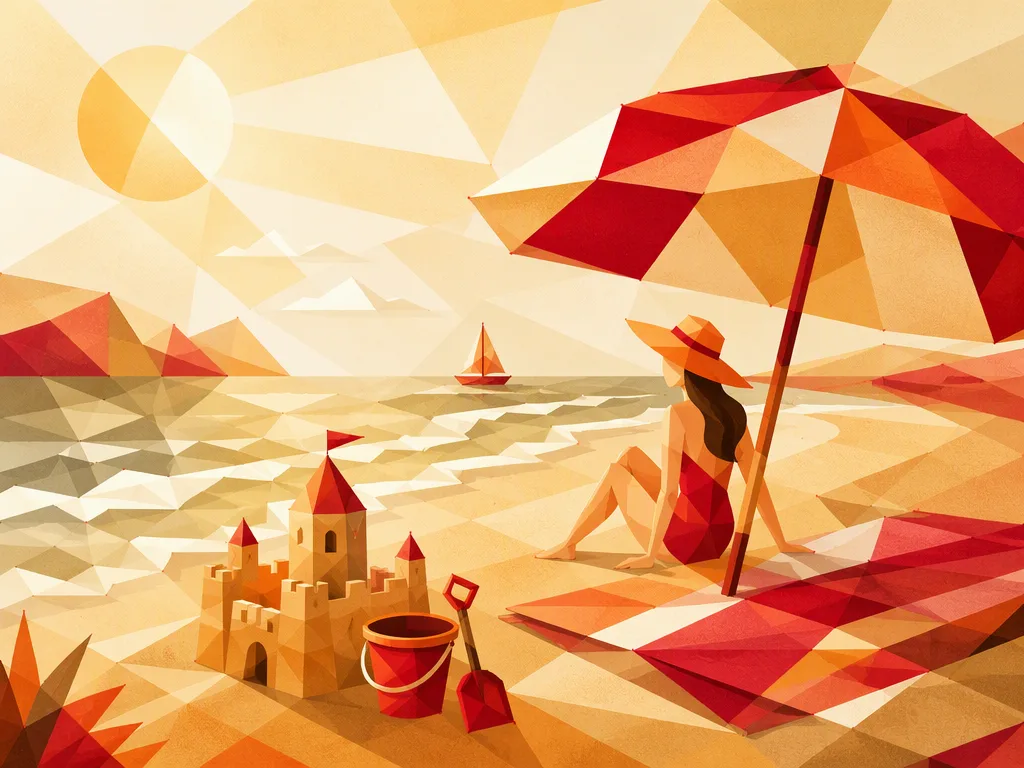
En la playa
Explora actividades en la playa, cosas útiles para llevar y formas sencillas de mantenerte a salvo.
Preview
Questions with solutions-
1. Elige la respuesta correcta.
¿Qué están haciendo los niños?
“Bring the bucket and shovel! Let's build something with this sand.”
- A sandcastle
- A beach umbrella
- A surfboard
Están construyendo con arena.
Show solution
- A sandcastle
Un poco de agua ayuda a que la arena se mantenga unida al construir un castillo de arena.
-
2. Completa el espacio en blanco.
“I'm wet after my swim. Can you pass me my ___ so I can dry myself?”
- bucket
- towel
- ball
Puedes envolverte con este objeto suave.
Show solution
“I'm wet after my swim. Can you pass me my towel so I can dry myself?”
Una toalla de playa también es útil para sentarse en la arena.
-
3. Completa el espacio en blanco.
“Let's sit under the beach ___. It'll give us some shade.”
- shovel
- ball
- umbrella
Se abre encima de ti y bloquea el sol.
Show solution
“Let's sit under the beach umbrella. It'll give us some shade.”
La sombra es un lugar donde algo bloquea la luz directa del sol.
-
4. Elige la respuesta correcta.
¿De qué actividad están hablando?
“Let's play on the sand. We can hit the ball over the net.”
- Swimming
- Beach volleyball
- Surfing
Show solution
- Beach volleyball
En el voleibol, los jugadores usan las manos o los brazos para golpear la pelota.
-
5. Elige la respuesta correcta.
¿Qué quiere hacer la persona que habla?
“I'd love to try riding the waves. Can I rent a board here?”
- Go snorkeling
- Build a sandcastle
- Go surfing
La persona que habla quiere deslizarse sobre el agua.
Show solution
- Go surfing
Los surfistas usan las olas para que los lleven hacia la orilla.
-
6. Completa el espacio en blanco.
“Before we go out in the sun, let's put ___ on our skin to help prevent sunburn.”
- sunscreen
- shampoo
- soap
Esto protege tu piel del sol.
Show solution
“Before we go out in the sun, let's put sunscreen on our skin to help prevent sunburn.”
Debes volver a ponerte protector solar después de nadar. Sigue las instrucciones del envase.
-
7. Elige la respuesta correcta.
¿Puede el visitante usar una silla de playa sin pagar?
“Are these beach chairs free?”
“No, but you can rent one for the afternoon.”- Yes, all the chairs are free.
- No, the visitor must pay to use one.
- Yes, if the visitor returns it today.
Piensa en lo que significa “rent”.
Show solution
- No, the visitor must pay to use one.
Cuando alquilas algo, pagas por usarlo durante un tiempo limitado.
-
8. Completa el espacio en blanco.
“The sand is very hot! I'll put on my ___ to protect my feet before I walk across it.”
- goggles
- sunglasses
- sandals
Te los pones en los pies.
Show solution
“The sand is very hot! I'll put on my sandals to protect my feet before I walk across it.”
La arena puede calentarse mucho bajo la luz directa del sol.
-
9. Completa el espacio en blanco.
“The water only comes up to my knees. It's ___ here.”
- shallow
- deep
- dry
La persona que habla puede estar de pie fácilmente en esta agua.
Show solution
“The water only comes up to my knees. It's shallow here.”
“Shallow” significa poco profundo. El agua puede ser más profunda a mayor distancia de la orilla.
-
10. Elige la respuesta correcta.
¿Dónde puede conseguir el visitante agua segura para beber?
“Can I drink the water from this faucet?”
“No. Use the drinking fountain beside the cafe.”- From the ocean
- From the drinking fountain beside the cafe
- From the faucet the visitor is using now
Uno de ellos está diseñado para beber agua.
Show solution
- From the drinking fountain beside the cafe
No todos los grifos tienen agua segura para beber.
-
11. Completa los espacios en blanco.
La familia quiere dejar la playa limpia.
“We'll ___ our trash home and ___ it in the trash can.”
- put
- take
Primero, lleva la basura a casa. Luego, debe ir en un contenedor.
Show solution
“We'll take our trash home and put it in the trash can.”
Llevar tu basura a casa ayuda a mantener limpias la arena y el agua.
-
12. Elige la respuesta correcta.
¿Qué significa este letrero de la playa?
“Red flag: No swimming today.”
- Swim only near the shore.
- Swim if you use a float.
- Stay out of the water.
El mensaje se aplica a todas las personas que quieren nadar.
Show solution
- Stay out of the water.
Sigue las señales de seguridad de la playa incluso cuando el agua parece tranquila.
-
13. Elige la respuesta correcta.
¿Cuál es el siguiente paso más seguro?
“There's broken glass on the sand beside our towels.”
- Keep people away and tell the beach staff.
- Bury the glass under more sand.
- Pick it up with your bare hands.
Protege a las personas sin tocar los pedazos filosos.
Show solution
- Keep people away and tell the beach staff.
El vidrio puede cortarte los pies incluso cuando está oculto bajo la arena.
-
14. Elige la respuesta correcta.
¿Cuál es la forma más segura de ayudar?
A child says, “I can't find my parents.” A lifeguard station is nearby.
- Send the child along the beach to search alone.
- Stay with the child and ask the lifeguard for help.
- Leave the child there and continue your walk.
No se debe dejar al niño solo.
Show solution
- Stay with the child and ask the lifeguard for help.
Un salvavidas u otro trabajador de la playa puede ayudar a un niño perdido a encontrar a su familia.
-
15. Elige la respuesta correcta.
¿Qué debe hacer la persona que habla en este bote?
“I'm a good swimmer. Do I need a life jacket?”
“Yes. Everyone must wear a life jacket on this boat.”- Wear a life jacket only when the boat stops.
- Keep a life jacket on the seat.
- Wear a life jacket during the boat trip.
La regla del bote no tiene excepciones para los buenos nadadores.
Show solution
- Wear a life jacket during the boat trip.
Un chaleco salvavidas te ayuda a flotar si te caes al agua.