


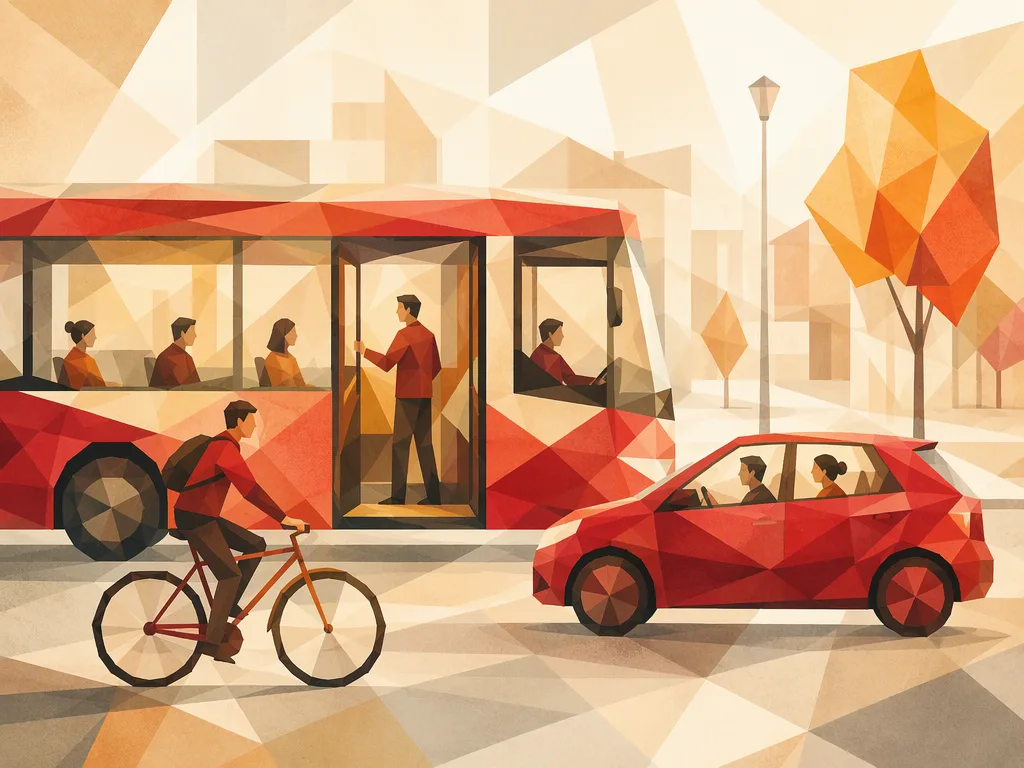
¿On the Bus o In the Car?
Explora “on” y “in” en mensajes breves sobre viajes en autobuses, autos y otros medios de transporte.
Preview
Questions with solutions-
1. Completa el espacio en blanco.
I'm ___ the bus to school. I'll get off at the next stop.
- on
- by
Show solution
I'm on the bus to school. I'll get off at the next stop.
“By bus” indica cómo viajas. “On the bus” indica dónde estás.
-
2. Completa el espacio en blanco.
I'm ___ the car, sitting next to Mom. She's driving.
- on
- in
Show solution
I'm in the car, sitting next to Mom. She's driving.
Usa “in the car” para referirte a un pasajero que está en el asiento delantero o en el asiento trasero.
-
3. Elige la respuesta correcta.
¿Dónde está el pasajero?
The train is moving. A passenger sends a message from her seat.
- I'm by the train.
- I'm on the train.
Show solution
- I'm on the train.
“On the train” se usa para los pasajeros que están sentados o de pie durante el viaje.
-
4. Completa el espacio en blanco.
I'm ___ a taxi, wearing my seat belt. The driver is taking me home.
- in
- on
Show solution
I'm in a taxi, wearing my seat belt. The driver is taking me home.
Di “in a taxi” para referirte a cualquier taxi, o “in the taxi” cuando la otra persona sabe de cuál se trata.
-
5. Completa el espacio en blanco.
Un mensaje de dos pasajeros durante su vuelo.
We're ___ the plane now. I can see clouds through the window.
- at
- on
Show solution
We're on the plane now. I can see clouds through the window.
Para un pasajero, “on the plane” significa dentro del avión, no sobre su techo.
-
6. Completa el espacio en blanco.
I'm ___ my bike, riding through the park.
- on
- in
Show solution
I'm on my bike, riding through the park.
“On” se mantiene igual en “on my bike”, “on your bike” y “on a bike”.
-
7. Elige la respuesta correcta.
¿Dónde está Alex ahora?
Alex: “I left the subway station. I'm riding to the next stop.”
- Alex is at the subway station.
- Alex is on the subway.
Show solution
- Alex is on the subway.
Usa “on the subway” durante el viaje y “at the station” para referirte al lugar donde esperas.
-
8. Completa el espacio en blanco.
Leo is ___ his motorcycle. He puts on his helmet before he starts riding.
- in
- on
Show solution
Leo is on his motorcycle. He puts on his helmet before he starts riding.
Quien conduce una motocicleta se sienta sobre el vehículo, no dentro de él.
-
9. Completa el espacio en blanco.
We're ___ our family van. Dad is driving, and I'm sitting in the back seat.
- in
- on
Show solution
We're in our family van. Dad is driving, and I'm sitting in the back seat.
Con una miniván familiar se usa “in”, como con un auto, aunque tiene más espacio.
-
10. Completa el espacio en blanco.
Un mensaje de un pasajero de un ferry.
We're ___ the ferry to the island. It has just left, and we're watching the water from our seats.
- by
- on
Show solution
We're on the ferry to the island. It has just left, and we're watching the water from our seats.
Un ferry transporta personas de un lado a otro de una extensión de agua. La expresión habitual que usan los pasajeros es “on the ferry”.
-
11. Elige la respuesta correcta.
¿Dónde está Ben?
A truck driver is giving Ben a ride. Ben sits beside her with his seat belt on.
- Ben is in the truck.
- Ben is on the truck.
Show solution
- Ben is in the truck.
Aquí, “in” describe los asientos dentro del camión, no el área abierta en la parte trasera.
-
12. Elige la respuesta correcta.
¿Dónde está Rosa durante el viaje?
An ambulance is taking Rosa to the hospital. She is lying on a bed with a nurse beside her.
- Rosa is on the ambulance.
- Rosa is in the ambulance.
Show solution
- Rosa is in the ambulance.
Una ambulancia lleva al hospital a las personas enfermas o heridas. Las personas que viajan dentro de ella usan “in”.
-
13. Completa el espacio en blanco.
I'm not walking along the path. I'm riding ___ a horse, sitting in the seat on its back.
- on
- in
Show solution
I'm not walking along the path. I'm riding on a horse, sitting in the seat on its back.
En inglés se usa “on” con los animales que montas, como los caballos.
-
14. Completa el espacio en blanco.
Mia leaves her car at home. The store is close, so she goes there ___ foot.
- in
- on
Show solution
Mia leaves her car at home. The store is close, so she goes there on foot.
“On foot” significa caminar. Esta expresión no usa “a” ni “the”.
-
15. Elige la respuesta correcta.
¿Dónde están las bolsas?
The bags are fixed to the roof, outside the car. There is no space for them beside the passengers.
- They are on the car.
- They are in the car.
Show solution
- They are on the car.
La palabra cambia según el significado: los pasajeros están “in the car”, pero las bolsas sobre el techo del auto están “on the car”.