


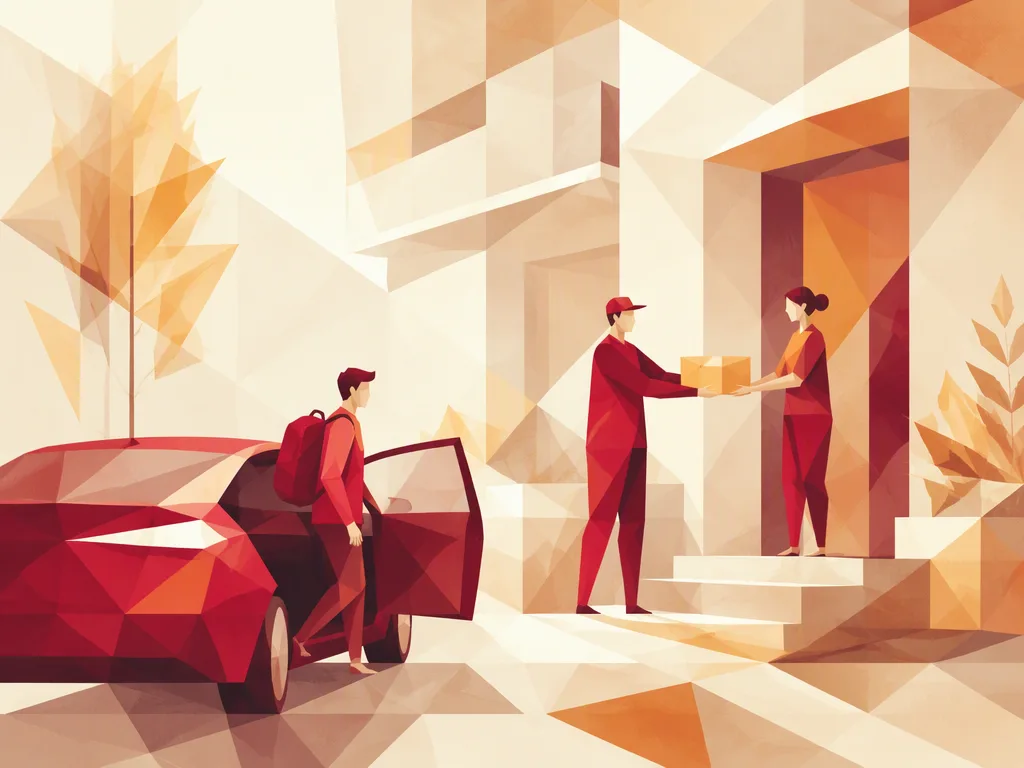
¿Pick Up o Drop Off?
Explora cómo usar “pick up” y “drop off” al hacer planes relacionados con traslados, paquetes y mandados cotidianos.
Preview
Questions with solutions-
1. Elige la respuesta correcta.
¿Qué hará mamá?
Mom will pick me up from school today.
- Collect the speaker at school.
- Take the speaker to school.
- Meet the speaker at home.
La persona que habla ya estará en la escuela.
Show solution
- Collect the speaker at school.
Cuando se refiere a personas, “pick up” significa llegar a recoger a alguien y llevarlo a algún lugar, a menudo en automóvil.
-
2. Elige la respuesta correcta.
¿Qué pasó con los libros?
I dropped the books off at the library on my way to work.
- They were collected from the library.
- They were left at the library.
- They were left at the workplace.
La biblioteca fue una parada durante el viaje.
Show solution
- They were left at the library.
Una entrega puede consistir en una parada rápida para dejar algo mientras te diriges a otro lugar.
-
3. Elige la respuesta correcta.
¿Qué oración tiene el mismo significado?
Could you pick up the tickets after work?
- Could you pick the tickets after work?
- Could you pick the tickets off after work?
- Could you pick the tickets up after work?
Conserva ambas partes de la expresión: “pick” y “up”.
Show solution
- Could you pick the tickets up after work?
Un sustantivo puede ir entre “pick” y “up”: tanto “pick up the tickets” como “pick the tickets up” son correctas.
-
4. Completa el espacio en blanco.
These bags need to go to Jo's house. Can you ___ there on your way to work?
- drop them off
- drop off them
“Them” sustituye a “these bags”.
Show solution
These bags need to go to Jo's house. Can you drop them off there on your way to work?
Un pronombre como “them” debe ir entre el verbo y la partícula: “drop them off”.
-
5. Completa el espacio en blanco.
Yesterday, I ___ my new glasses from the store.
- pick up
- picked up
- picking up
“Yesterday” sitúa la acción en el pasado.
Show solution
Yesterday, I picked up my new glasses from the store.
Para formar el pasado, agrega “-ed” al verbo. La partícula “up” no cambia.
-
6. Completa el espacio en blanco.
I can't talk right now. I'm ___ my daughter at school.
- droping off
- dropped off
- dropping off
La acción está ocurriendo ahora. Revisa la ortografía del verbo.
Show solution
I can't talk right now. I'm dropping off my daughter at school.
Duplica la “p” final antes de añadir “-ing”: “drop” se convierte en “dropping”.
-
7. Completa el espacio en blanco.
My suit is ready. I'll pick it up ___ the dry cleaner's after work.
- from
- to
- into
El traje está en la tintorería en este momento.
Show solution
My suit is ready. I'll pick it up from the dry cleaner's after work.
“From” indica el lugar donde recoges algo antes de llevártelo.
-
8. Completa el espacio en blanco.
Mi vecino mantendrá la llave a salvo mientras yo esté fuera.
I'll drop the spare key off ___ my neighbor before I leave.
- at
- with
- from
El vecino es la persona que recibirá y guardará la llave.
Show solution
I'll drop the spare key off with my neighbor before I leave.
Usa “with” para indicar la persona que recibe algo: “drop it off with my neighbor”.
-
9. Completa el espacio en blanco.
Please drop me off ___ the main entrance, not in the parking lot.
- from
- of
- at
La entrada es el lugar exacto donde debe terminar el viaje.
Show solution
Please drop me off at the main entrance, not in the parking lot.
Usa “at” para indicar un punto específico donde se deja a un pasajero, como una entrada o una parada de autobús.
-
10. Elige la respuesta correcta.
¿Qué espera la persona que habla?
I'll get picked up outside my building.
- Someone will come to collect the speaker.
- The speaker will collect someone else.
- The speaker will leave a package outside.
La persona que habla recibe la acción en lugar de realizarla.
Show solution
- Someone will come to collect the speaker.
“Get picked up” es una forma común de describir que otra persona viene a recogerte.
-
11. Elige la respuesta correcta.
¿Qué ha cambiado en el plan?
Don't pick me up after class. I'll take the bus home instead.
- The speaker wants a ride to class.
- The speaker no longer needs a ride home.
- The speaker wants to be collected at the bus stop.
El autobús reemplaza el plan de viaje original.
Show solution
- The speaker no longer needs a ride home.
“Instead” indica que el autobús es una alternativa a que pasen a recoger a la persona, como se había planeado, y no una parte adicional del plan.
-
12. Elige la respuesta correcta.
¿Qué planea hacer el conductor?
“Can you stay for dinner?”
“Sorry, I can only drop you off. I have to get back to work.”- Stay until dinner is over.
- Return to collect the other person after dinner.
- Leave after taking the other person there.
El conductor tiene que estar en otro lugar.
Show solution
- Leave after taking the other person there.
Dejar a alguien en su destino no significa quedarse con esa persona después de que llegue.
-
13. Elige la respuesta correcta.
¿Dónde comienza el viaje del pasajero?
Please pick me up at the office and drop me off at the gym.
- At the office.
- At the gym.
Sigue las dos acciones en el orden en que ocurren.
Show solution
- At the office.
La recogida y la bajada de un pasajero pueden describir el inicio y el final de un mismo viaje.
-
14. Elige la respuesta correcta.
¿Dónde está el abrigo mientras lo están limpiando?
I dropped off my coat at the cleaner's on Monday. They said it would be ready to pick up on Friday.
- At the owner's home.
- At the cleaner's.
- In the owner's car.
El dueño deja el abrigo primero y lo recoge después.
Show solution
- At the cleaner's.
Para servicios como la limpieza o las reparaciones, a menudo se deja un artículo antes de volver a recogerlo.
-
15. Elige la respuesta correcta.
¿Qué hará Nina con la bicicleta?
Nina: I can pick up your repaired bike, but I can't drop it off at your place.
Owen: No problem. I'll collect it from your garage tonight.- Take the broken bike to the repair shop.
- Bring the repaired bike to Owen's home.
- Bring the repaired bike from the shop to her garage.
Fíjate dónde planea Owen recoger la bicicleta más tarde.
Show solution
- Bring the repaired bike from the shop to her garage.
Recoger algo no implica necesariamente llevarlo a la casa de su dueño.