


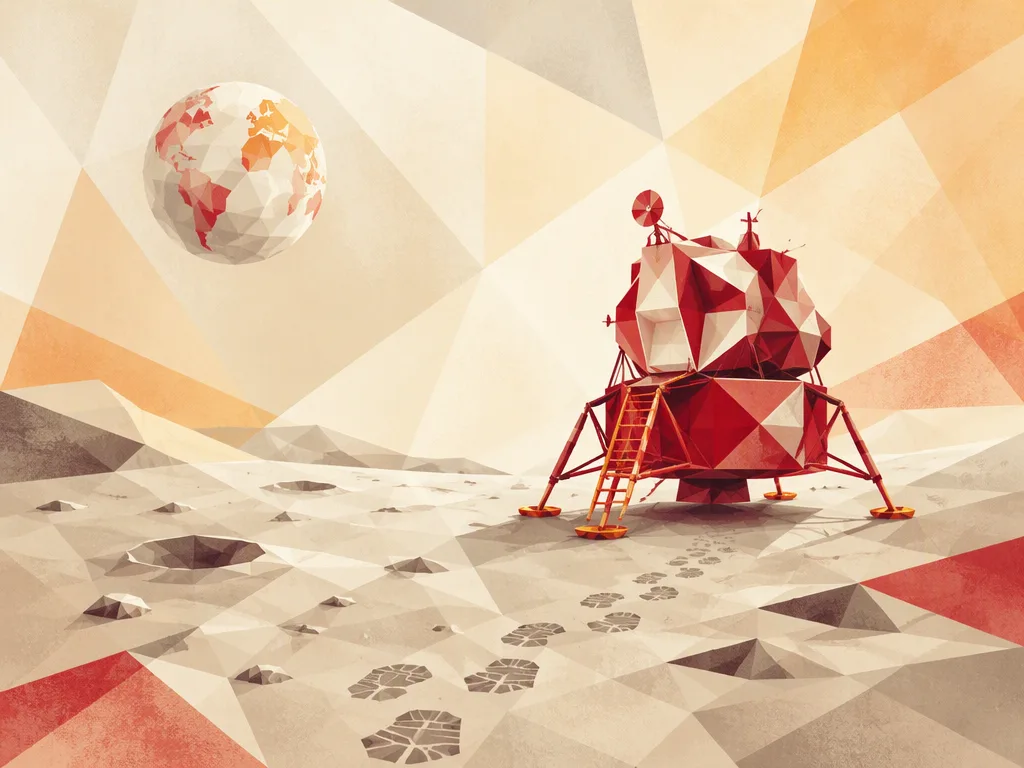
Misiones espaciales que hicieron historia
Explora viajes históricos a la Luna, los planetas y los cometas, y descubre cómo las ingeniosas soluciones de ingeniería los hicieron posibles.
Preview
Questions with solutions-
1. Elige la respuesta correcta.
¿Qué hizo que el Sputnik 1 fuera histórico?
Launched in 1957, Sputnik 1 broadcast radio signals while circling Earth.
- It was the first satellite to carry an animal into orbit.
- It was the first human-made satellite to orbit Earth.
- It was the first satellite to transmit television programs.
Su principal logro fue alcanzar la órbita, no llevar a un pasajero.
Show solution
- It was the first human-made satellite to orbit Earth.
Las personas podían detectar las señales de radio del Sputnik desde la Tierra, lo que convirtió a este pequeño satélite en un poderoso símbolo de la era espacial.
-
2. Elige la respuesta correcta.
¿Qué hizo Yuri Gagarin antes que cualquier otra persona?
Gagarin traveled aboard Vostok 1 in 1961. His historic flight lasted less than two hours.
- Travel into space and orbit Earth.
- Walk outside a spacecraft.
- Live aboard a space station.
Permaneció dentro de su nave espacial durante su viaje alrededor de la Tierra.
Show solution
- Travel into space and orbit Earth.
Vostok 1 completó una órbita. Gagarin se eyectó de la cápsula durante el descenso final y aterrizó en paracaídas.
-
3. Elige la respuesta correcta.
Which achievement made Apollo 11 historic?
In July 1969, Apollo 11 carried Neil Armstrong, Buzz Aldrin, and Michael Collins toward the Moon.
- A spacecraft landed on the Moon for the first time.
- A crew orbited the Moon for the first time.
- Humans landed on the Moon for the first time.
The mission's most famous moment happened on the lunar surface.
Show solution
- Humans landed on the Moon for the first time.
Armstrong and Aldrin explored the surface while Collins remained in lunar orbit, ready for their return.
-
4. Elige la respuesta correcta.
¿Qué tipo de misión fue la de Mariner 4?
In 1965, Mariner 4 passed Mars and transmitted close-up images. It continued into space rather than entering orbit or reaching the surface.
- A surface landing.
- A flyby.
- An orbital mission.
La nave espacial recopiló información al pasar cerca de su objetivo.
Show solution
- A flyby.
Mariner 4 transmitió con éxito las primeras imágenes de cerca de Marte, que revelaron un paisaje marcado por cráteres de impacto.
-
5. Elige la respuesta correcta.
¿Por qué fue especialmente difícil para Venera 13 permanecer mucho tiempo en Venus?
Venera 13 landed on Venus in 1982. Surface temperatures there are high enough to melt lead.
- Venus has no solid ground to support a lander.
- The surface is so cold that batteries quickly freeze.
- The heat puts severe stress on electronic equipment.
Considera cómo reaccionan los dispositivos electrónicos comunes a temperaturas muy altas.
Show solution
- The heat puts severe stress on electronic equipment.
La densa atmósfera de Venus atrapa el calor, lo que hace que su superficie sea más caliente que la de Mercurio, aunque Venus está más lejos del Sol.
-
6. Elige la respuesta correcta.
¿Qué nueva función asumió el módulo lunar del Apolo 13?
After an oxygen tank failed on Apollo 13, the Moon landing was canceled. The crew moved into the lunar module while the command module's systems were shut down to save power.
- A temporary life-support shelter for the crew.
- A replacement capsule for reentry through Earth's atmosphere.
- A vehicle for completing an uncrewed Moon landing.
La prioridad inmediata era mantener con vida a los astronautas, no llegar a la Luna.
Show solution
- A temporary life-support shelter for the crew.
La tripulación regresó más tarde al módulo de mando, cuyo escudo térmico la protegió durante la reentrada.
-
7. Elige la respuesta correcta.
How did astronauts on the 1993 servicing mission improve Hubble's images?
Hubble's main mirror had a flaw that blurred its images. Astronauts installed equipment that adjusted the path of light reaching its instruments.
- They removed and replaced the entire main mirror.
- They added corrective optics that made up for the mirror's flaw.
- They reshaped the original mirror's surface in orbit.
Think of a solution similar to giving the telescope glasses.
Show solution
- They added corrective optics that made up for the mirror's flaw.
Hubble was designed for servicing in space, so astronauts could replace instruments without bringing the telescope back to Earth.
-
8. Elige la respuesta correcta.
¿Qué tarea dependía de que Huygens llegara al suelo?
Cassini studied Saturn from orbit. Its companion probe, Huygens, separated from it, descended through the atmosphere of Saturn's moon Titan, and landed in 2005.
- Tracking Titan's path around Saturn.
- Studying the upper atmosphere during descent.
- Directly testing how firm the ground was at the landing site.
Una medición requiere contacto físico con la superficie.
Show solution
- Directly testing how firm the ground was at the landing site.
Huygens llevaba un instrumento que examinó el suelo durante el aterrizaje. También realizó el primer aterrizaje en una luna distinta de la de la Tierra.
-
9. Elige la respuesta correcta.
Why was aerogel useful for collecting comet dust?
Stardust caught fast-moving comet particles in aerogel, an extremely light, porous material. The grains left tracks as the material gradually slowed them down.
- It captured fragile grains while limiting damage from sudden impacts.
- It turned the grains into gas for storage.
- It reflected the grains away to prevent collection.
A sudden stop could destroy the material scientists wanted to study.
Show solution
- It captured fragile grains while limiting damage from sudden impacts.
Stardust returned its collector to Earth, allowing laboratories to examine the captured comet material with many different instruments.
-
10. Elige la respuesta correcta.
¿Cómo ayudaron los encuentros con planetas a Voyager 2 a continuar su viaje?
Voyager 2 reached several giant planets using carefully timed close passes. These gravity assists helped it travel farther without relying only on its engines.
- Friction in the planets' atmospheres increased its speed.
- The planets' gravity changed its speed and direction.
- The spacecraft collected fresh rocket fuel from the planets' clouds.
La nave espacial se benefició de una fuerza que actúa a distancia.
Show solution
- The planets' gravity changed its speed and direction.
La ganancia de energía proviene del movimiento del planeta, no de combustible recolectado en las cercanías. El movimiento del propio planeta cambia en una cantidad extremadamente pequeña.
-
11. Elige la respuesta correcta.
¿Por qué un pequeño rebote podría alejar mucho a Philae de su primer lugar de aterrizaje?
Rosetta's Philae lander reached a small comet in 2014, but its anchoring harpoons failed to fire. It bounced away from its first landing spot before touching down elsewhere.
- Its harpoons fired so strongly that they launched it upward.
- The comet had no gravity, so the lander could never touch down again.
- The comet's weak gravity pulled the lander back down only gently.
Un cometa pequeño tiene mucha menos masa que la Tierra, pero aun así atrae objetos.
Show solution
- The comet's weak gravity pulled the lander back down only gently.
Aterrizar suavemente no siempre es suficiente en un mundo de baja gravedad. El equipo de anclaje ayuda a mantener una nave espacial sujeta después del contacto.
-
12. Elige la respuesta correcta.
¿Qué demostró el período orbital más corto?
DART deliberately struck Dimorphos, a small moon of an asteroid. After the impact, Dimorphos completed each orbit around its larger companion in less time.
- A spacecraft impact can change an asteroid's motion.
- The collision completely destroyed Dimorphos.
- Every threatening asteroid can now be redirected with certainty.
La medición muestra un cambio específico, no una garantía sobre todas las situaciones futuras.
Show solution
- A spacecraft impact can change an asteroid's motion.
DART fue una prueba controlada de defensa planetaria. Dimorphos no representaba una amenaza para la Tierra, por lo que los científicos pudieron probar la técnica de forma segura.