


Descubre la ciencia detrás de las experiencias cotidianas, desde la piel de gallina y el hipo hasta el equilibrio y el dolor muscular.
Preview
Questions with solutions-
1. Elige la respuesta correcta.
¿Cómo ayuda el sudor a enfriar tu cuerpo?
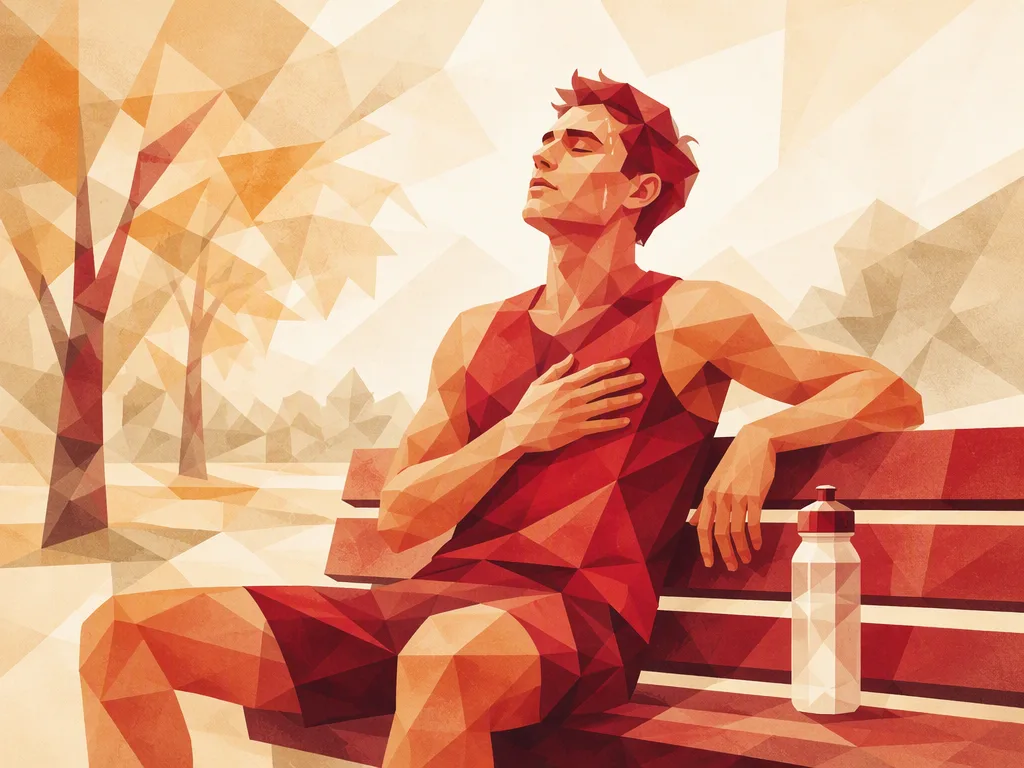
After a run, your skin is wet with sweat. A breeze helps you cool down.
- It switches off heat production in working muscles.
- It takes heat from the skin as it evaporates.
- It cools the body mainly by staying liquid on the skin.
Piensa en lo que sucede cuando el agua se seca.
Show solution
- It takes heat from the skin as it evaporates.
La evaporación utiliza el calor de tu piel. El sudor que gotea sin evaporarse enfría mucho menos.
-
2. Elige la respuesta correcta.
¿Qué hace el parpadeo por la superficie de tu ojo?
You blink regularly, even when there is no dust or bright light around you.
- It spreads a thin layer of tears over the surface.
- It makes the pupil smaller to let in less light.
- It changes the shape of the lens to focus on nearby objects.
La superficie expuesta del ojo necesita humedad.
Show solution
- It spreads a thin layer of tears over the surface.
La capa de lágrimas mantiene el ojo húmedo y crea una superficie lisa que ayuda a que la luz entre con claridad.
-
3. Completa el espacio en blanco.
When you get goosebumps, tiny muscles at the base of your hairs contract, making the hairs ___.
- grow longer
- fall out
- stand up
Este movimiento puede ayudar a los animales con pelaje denso a mantener el aire caliente cerca de la piel.
Show solution
When you get goosebumps, tiny muscles at the base of your hairs contract, making the hairs stand up.
Los pelos erizados atrapan más aire en un pelaje denso. Los seres humanos tienen tan poco vello corporal que la piel de gallina no les proporciona mucho calor.
-
4. Elige la respuesta correcta.
Why can a blocked nose make food seem less flavorful?
You have a cold. You can still notice sweetness, but your favorite soup seems to have less flavor.
- The nose normally detects sweetness instead of the tongue.
- Fewer food aromas reach the smell receptors.
- A blocked nose prevents saliva from dissolving food.
Flavor involves more than the basic tastes detected by your tongue.
Show solution
- Fewer food aromas reach the smell receptors.
Aromas travel from your mouth toward your nose while you eat. Smell helps you recognize flavors beyond basic tastes such as sweet and salty.
-
5. Completa el espacio en blanco.
A hiccup begins when the ___, the main breathing muscle below the lungs, contracts suddenly.
- diaphragm
- stomach
- esophagus
Este músculo normalmente ayuda a que el aire entre en tus pulmones.
Show solution
A hiccup begins when the diaphragm, the main breathing muscle below the lungs, contracts suddenly.
Después de la contracción muscular repentina, las cuerdas vocales se cierran rápidamente. Ese cierre produce el sonido característico del hipo.
-
6. Elige la respuesta correcta.
¿Qué protege normalmente el revestimiento del estómago de su propio ácido?
Your stomach contains strong acid that helps digestion, yet its healthy lining is usually protected.
- The acid stays in the center and never touches the stomach wall.
- The stomach wall is made of tissue that acid cannot damage.
- A mucus layer helps shield the lining and holds substances that neutralize acid.
La protección proviene de una barrera en la superficie interna.
Show solution
- A mucus layer helps shield the lining and holds substances that neutralize acid.
La barrera de moco retiene bicarbonato, que neutraliza el ácido cerca del revestimiento del estómago. El daño a esta protección puede contribuir a la aparición de úlceras.
-
7. Elige la respuesta correcta.
¿Cómo puede tu mano empezar a moverse tan rápido?
Your hand begins to pull away from a hot pan before you are fully aware of the pain.
- The spinal cord can start a withdrawal response.
- Heat makes the arm muscles contract without any nerve signals.
- You must consciously judge the temperature before your hand can move.
No todos los movimientos de protección requieren una decisión consciente.
Show solution
- The spinal cord can start a withdrawal response.
Un reflejo de retirada utiliza una vía nerviosa corta que pasa por la médula espinal. Tu cerebro sigue recibiendo información sobre lo que ocurrió.
-
8. Elige la respuesta correcta.
¿Por qué cada ojo tiene un punto ciego?
Each healthy eye has a small area where it cannot detect an image. You usually do not notice this gap.
- The pupil casts a permanent shadow on the retina.
- The optic nerve leaves the eye at a point with no light-sensitive cells.
- The lens cannot focus light onto the center of the retina.
Considera dónde la conexión del ojo con el cerebro atraviesa la retina.
Show solution
- The optic nerve leaves the eye at a point with no light-sensitive cells.
Tu cerebro suele completar el área faltante usando información visual de las zonas cercanas e información del otro ojo.
-
9. Completa el espacio en blanco.
Bones are living tissue that responds to repeated loads. Regular weight-bearing activity can help them become ___ as tissue is rebuilt.
- softer
- lighter
- denser
Los huesos pueden adaptarse para soportar las cargas a las que se someten regularmente.
Show solution
Bones are living tissue that responds to repeated loads. Regular weight-bearing activity can help them become denser as tissue is rebuilt.
El tejido óseo se elimina y se reemplaza constantemente. Actividades como caminar pueden ayudar a mantener o aumentar la densidad ósea.
-
10. Elige la respuesta correcta.
What helps cause the wrinkles that normally form on your fingers in water?
Your fingertips wrinkle after several minutes in water. This reaction is much weaker in fingers with certain kinds of nerve damage.
- Nerve activity changes blood flow beneath the skin.
- The skin simply absorbs water and swells, with no role for nerves.
- Water pressure pushes the skin into folds without a response from the body.
The link with nerve damage suggests an active response inside the finger.
Show solution
- Nerve activity changes blood flow beneath the skin.
Nerve activity narrows small blood vessels in the fingertips. The resulting change in tissue volume helps form the wrinkles.
-
11. Elige la respuesta correcta.
¿Por qué puede continuar la sensación de movimiento después de que te detienes?
You spin around, stop, and briefly feel as if you are still moving.
- The outer ears continue turning after the head stops.
- The brain temporarily stops receiving all balance signals.
- Fluid in the inner ear keeps moving briefly relative to the stopped head.
Algunos sensores del equilibrio responden al movimiento dentro de estructuras llenas de líquido.
Show solution
- Fluid in the inner ear keeps moving briefly relative to the stopped head.
El líquido en movimiento dobla diminutos pelos sensoriales en el oído interno. Estos sensores pueden indicar rotación incluso después de que tu cabeza ha dejado de moverse.
-
12. Elige la respuesta correcta.
What can contribute to the soreness that appears later?
Your thighs feel sore the day after an unfamiliar downhill hike. Your lactate levels returned to normal long before that.
- Lactate remaining trapped in the muscles for several days.
- The muscles' response to unfamiliar strain, including inflammation.
- Blood flow to the working muscles stopping until the next workout.
Walking downhill makes muscles work while lengthening, which can cause delayed soreness.
Show solution
- The muscles' response to unfamiliar strain, including inflammation.
Unfamiliar exercise, especially when muscles work while lengthening, can trigger delayed soreness. Being sore is not a reliable measure of workout quality.