


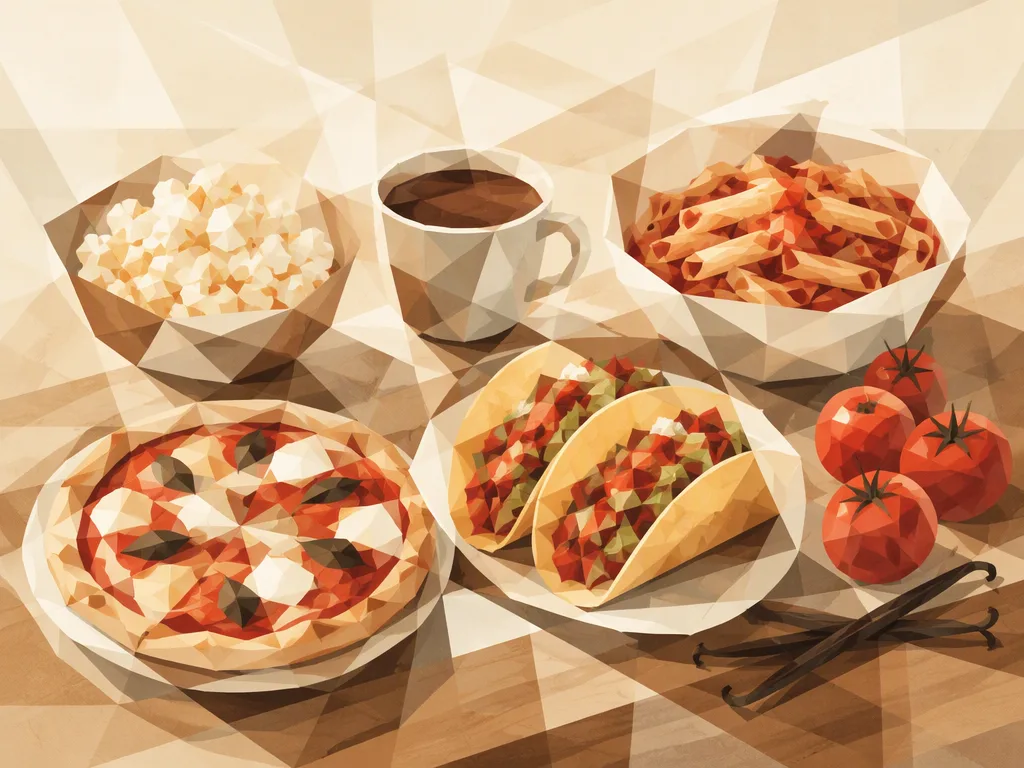
La historia detrás de las comidas favoritas
Descubre de dónde surgieron las comidas que conoces y cómo los viajes, las nuevas ideas y los cambios en los gustos les dieron forma.
Preview
Questions with solutions-
1. Elige la respuesta correcta.
¿Qué país está estrechamente vinculado con los inicios de la historia de la pizza moderna?
Naples is famous for its pizza tradition. This southern Italian city helped turn pizza into a popular everyday food.
- Greece
- Italy
- The United States
Show solution
- Italy
En Nápoles, la pizza se convirtió en una comida sencilla que muchas personas comunes podían pagar.
-
2. Completa el espacio en blanco.
People in ancient Mesoamerica drank cacao mixed with water and other ingredients. Long before solid chocolate bars, cacao was enjoyed as a ___.
- baked cake
- frozen dessert
- drink
Show solution
People in ancient Mesoamerica drank cacao mixed with water and other ingredients. Long before solid chocolate bars, cacao was enjoyed as a drink.
Las primeras bebidas de cacao no siempre eran dulces; algunas incluían especias.
-
3. Elige la respuesta correcta.
¿Qué le dio al sándwich su nombre en inglés?
The English word “sandwich” comes from the title of the Earl of Sandwich, a British nobleman.
- A nobleman's title
- A type of bread
- A method of cooking
Show solution
- A nobleman's title
El nombre está vinculado a este noble, pero la gente ya comía pan con rellenos mucho antes de su época.
-
4. Completa el espacio en blanco.
Long before potatoes reached Europe, people grew them in the Andes of South America. Potatoes originally came from ___.
- Europe
- South America
- East Asia
Show solution
Long before potatoes reached Europe, people grew them in the Andes of South America. Potatoes originally came from South America.
Más tarde, las papas se volvieron valiosas en Europa porque una pequeña superficie de tierra podía producir una gran cantidad de alimentos.
-
5. Elige la respuesta correcta.
Which older food tradition helped shape tacos?
Corn tortillas have long been an important food in Mexico. Tacos use these thin, round flatbreads to hold a filling.
- Using cooked rice as a base
- Using a wheat loaf as a base
- Using corn tortillas as a base
Show solution
- Using corn tortillas as a base
Corn tortillas can be folded around many different fillings, allowing tacos to take many forms.
-
6. Elige la respuesta correcta.
In which country was Caesar salad created?
Caesar Cardini, an Italian-born restaurant owner, is widely credited with creating Caesar salad in Tijuana, Mexico.
- Mexico
- Italy
- The United States
His birthplace and the location of his restaurant were in different countries.
Show solution
- Mexico
Caesar salad is named after Caesar Cardini, not a Roman emperor.
-
7. Elige la respuesta correcta.
How has ketchup changed over time?
Some early sauces called ketchup were made from fish and contained no tomatoes. Tomato-based ketchup became common much later.
- It stopped being a sauce.
- Its main ingredients changed.
- It changed from a tomato sauce to a fish sauce.
Show solution
- Its main ingredients changed.
Mushrooms were also used in some older ketchup recipes.
-
8. Elige la respuesta correcta.
What was the main purpose of the rice in these early forms of sushi?
Some early forms of sushi used fermented rice to preserve fish. The rice was often thrown away rather than eaten.
- Coating the fish before frying
- Freezing the fish for later
- Keeping the fish safe to eat for longer
The rice had a practical role beyond being part of a meal.
Show solution
- Keeping the fish safe to eat for longer
Modern sushi usually includes rice that people eat, so the role of rice has changed.
-
9. Elige la respuesta correcta.
What does this history show about the croissant?
The croissant has roots in Austria's kipferl, a curved pastry. French bakers later developed the familiar flaky version.
- Baking traditions from two countries helped shape it.
- French bakers kept the earlier recipe unchanged.
- The flaky version developed in Austria before reaching France.
Show solution
- Baking traditions from two countries helped shape it.
A croissant's flaky texture comes from thin layers of dough and butter.
-
10. Elige la respuesta correcta.
¿Cómo surgió el plato de pescado con papas fritas?
Jewish communities brought a tradition of fried fish to Britain. Fried potatoes developed as a separate food tradition. The two foods were later served together.
- Potatoes replaced the fish in an older dish.
- Two existing food traditions were combined.
- Fish frying and potato frying were invented together.
Ambos componentes ya existían antes de combinarse en un solo plato.
Show solution
- Two existing food traditions were combined.
Un plato nuevo puede surgir al combinar alimentos conocidos, sin inventar un nuevo método de cocción.
-
11. Elige la respuesta correcta.
¿Qué era cierto sobre la pasta en Italia antes de que Marco Polo regresara?
A popular story says Marco Polo brought pasta to Italy from China. However, Italian records mention pasta before he returned from his travels.
- Pasta arrived only after he returned.
- Pasta was eaten only in China.
- Pasta was already known in Italy.
El orden de los acontecimientos es importante aquí.
Show solution
- Pasta was already known in Italy.
Las tradiciones relacionadas con los fideos se desarrollaron en distintos lugares; su historia es más amplia que un solo relato de viaje.
-
12. Completa el espacio en blanco.
People ate popcorn in the Americas long before movie theaters existed. Later, it became a popular theater snack because it was easy to prepare and ___.
- inexpensive
- expensive
- hard to find
Un refrigerio que muchos clientes pueden pagar es más fácil de vender a un público amplio.
Show solution
People ate popcorn in the Americas long before movie theaters existed. Later, it became a popular theater snack because it was easy to prepare and inexpensive.
Para comer palomitas de maíz no se necesitan platos ni tenedores, lo que también las hace prácticas para quienes van al cine.
-
13. Elige la respuesta correcta.
What helped vanilla farming spread to new regions?
The plant that most natural vanilla comes from is native to Mexico and Central America. Hand pollination—moving pollen within a flower—helped farmers grow vanilla in other regions.
- The plants stopped producing flowers.
- People moved pollen by hand.
- The plants no longer needed pollination.
The new method helped people carry out a process the plant still needed.
Show solution
- People moved pollen by hand.
After pollination, the flowers can develop into pods that provide vanilla flavor.
-
14. Elige la respuesta correcta.
How did cooling machines help ice cream reach more customers?
Early ice cream makers depended on supplies of ice. Later, machines could provide steady cooling, making production and storage easier.
- Shops no longer needed to keep ice cream cold.
- Shops became more dependent on natural ice.
- Shops could make and store ice cream more easily.
Reliable storage helps a food become more widely available.
Show solution
- Shops could make and store ice cream more easily.
Changes in food history can come from better equipment, not just new recipes.
-
15. Elige la respuesta correcta.
What does the history of tomato sauce show about food traditions?
Tomatoes come from the Americas. After they reached Europe, cooks gradually began using them in Italian sauces. Those sauces are now strongly linked with Italian food.
- A food tradition can include ingredients from another part of the world.
- Traditional dishes use only ingredients native to their country.
- Italian tomato sauces were common before tomatoes reached Europe.
An ingredient's original home and a dish's cultural home can be different.
Show solution
- A food tradition can include ingredients from another part of the world.
A dish's identity depends on how people use ingredients, not only on where the plants first grew.