


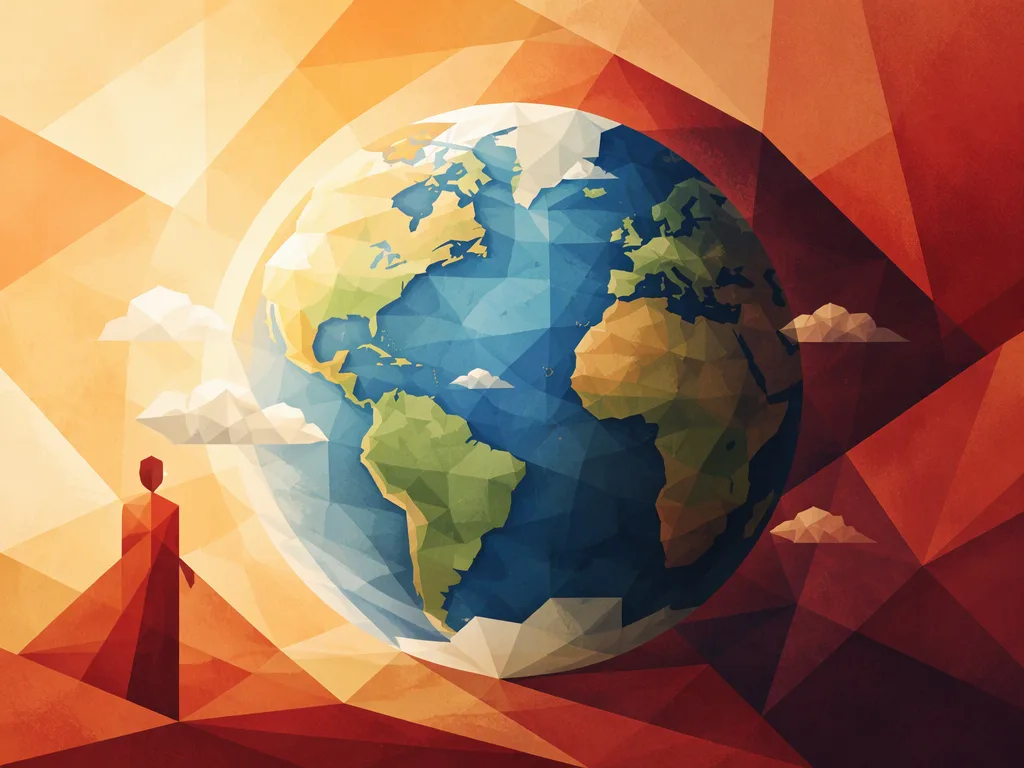
Our Planet Earth
Explore Earth's continents, oceans, and weather, from familiar facts to surprising discoveries.
Preview
Questions with solutions-
1. Choisissez la bonne réponse.
What does ocean water usually taste like?
- Sweet
- Salty
- Sour
Show solution
- Salty
Ocean water contains salt. Rivers carry small amounts of salt from rocks into the sea.
-
2. Choisissez la bonne réponse.
Which continent is Brazil on?
- South America
- Europe
- Asia
Brazil is on the same continent as Argentina.
Show solution
- South America
Brazil is the largest country in South America. Much of the Amazon rainforest is there.
-
3. Complétez le blanc.
On a very cold day, soft white flakes of ___ can fall from the clouds.
- rain
- fog
- snow
It can cover the ground in white.
Show solution
On a very cold day, soft white flakes of snow can fall from the clouds.
Snowflakes have different shapes, but they usually have six sides or six arms.
-
4. Choisissez la bonne réponse.
Which ocean is the largest?
- The Atlantic Ocean
- The Pacific Ocean
- The Indian Ocean
It lies between Asia and the Americas.
Show solution
- The Pacific Ocean
The Pacific Ocean covers a larger area than all of Earth's land put together.
-
5. Choisissez la bonne réponse.
What makes a place a desert?
- Hot weather all year
- Sand covering all the ground
- Very little rain or snow
Think about how much water falls from the sky.
Show solution
- Very little rain or snow
Some deserts are cold, and some have more rock than sand. Deserts are dry, not always hot.
-
6. Choisissez la bonne réponse.
When it is summer in Canada, what season is it in Australia?
- Winter
- Summer
- Spring
Canada is north of the equator. Australia is south of it.
Show solution
- Winter
The northern and southern halves of Earth have opposite seasons. Christmas is in summer in Australia.
-
7. Choisissez la bonne réponse.
Which continent is mostly covered by thick ice?
- Africa
- Antarctica
- Europe
The South Pole is there.
Show solution
- Antarctica
Antarctica's ice lies on land. In contrast, much of the ice around the North Pole floats on the ocean.
-
8. Complétez le blanc.
Clouds are made of tiny drops of water or small pieces of ___.
- salt
- rock
- ice
High above the ground, the air can be very cold.
Show solution
Clouds are made of tiny drops of water or small pieces of ice.
A cloud can contain ice even when the weather on the ground is warm.
-
9. Choisissez la bonne réponse.
A mountain under the ocean grows until its top rises above the water. What does the top of the mountain become?
- An island
- A lake
- A valley
Water surrounds this new land.
Show solution
- An island
Some islands form when hot rock comes up from inside Earth and builds an underwater mountain.
-
10. Choisissez la bonne réponse.
The ocean rises and falls along a beach each day. What mainly causes this?
- The heat of the sun
- Rain falling over the land
- The pull of the moon
Think about the nearby object that moves around Earth.
Show solution
- The pull of the moon
These changes are called tides. The sun also pulls on ocean water, but the moon has a stronger effect on tides.
-
11. Complétez le blanc.
The sun warms ocean water. Some water becomes a gas and rises into the ___.
- sand
- air
- ice
This is the space above the ocean.
Show solution
The sun warms ocean water. Some water becomes a gas and rises into the air.
This change is called evaporation. The salt stays behind when ocean water becomes a gas.
-
12. Choisissez la bonne réponse.
Two places are on the same mountain: one near the bottom and one near the top. Which is usually colder?
- The place near the top
- The place near the bottom
- Both are always equally cold
Think about where snow often stays on a mountain.
Show solution
- The place near the top
Air usually gets colder as you go higher. This helps explain why some mountains have snow even in summer.
-
13. Choisissez la bonne réponse.
During a storm, why do we usually see lightning before we hear thunder?
- Thunder starts several seconds after lightning
- Lightning happens much closer to us than thunder
- Light travels faster than sound
Both come from the same event, but they reach us at different speeds.
Show solution
- Light travels faster than sound
Lightning heats the air very quickly. This produces the sound we call thunder.
-
14. Choisissez la bonne réponse.
Why do places near the sea have cooler summers and warmer winters than places far from the sea?
- The sea changes temperature faster than land
- The sea changes temperature more slowly than land
- The sea stays the same temperature all year
The sea can keep heat for a long time.
Show solution
- The sea changes temperature more slowly than land
In summer, the sea warms up slowly, so it keeps the air nearby cooler. In winter, the sea gives some of its stored heat to the air nearby.
-
15. Choisissez la bonne réponse.
A place usually has warm summers, but one summer day is cold. What does this tell us?
- Only the weather has changed, not the climate
- The climate has changed in one day
- Winter has started early
One unusual day does not describe many years.
Show solution
- Only the weather has changed, not the climate
Weather can change from day to day. Climate describes the usual weather over many years.