


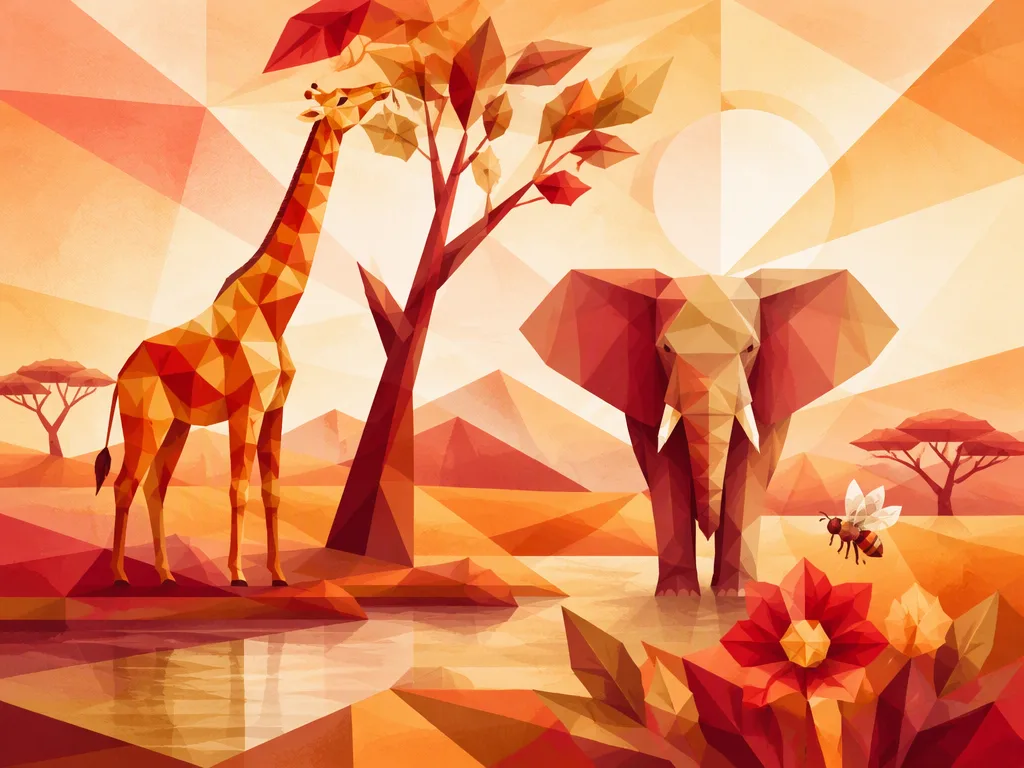
Amazing Animal Facts: Easy Edition
Discover how animals live, grow, and use their amazing bodies—from a giraffe's neck to a camel's hump.
Preview
Questions with solutions-
1. Wybierz poprawną odpowiedź.
Which animal has a very long neck?
- A zebra
- A giraffe
- An elephant
Show solution
- A giraffe
A giraffe's long neck helps it reach leaves high in trees.
-
2. Wybierz poprawną odpowiedź.
What covers a bird's body and helps it fly?
- Feathers
- Fur
- Scales
Show solution
- Feathers
Feathers also help keep birds warm. Even birds that cannot fly have feathers.
-
3. Wybierz poprawną odpowiedź.
Which animal feeds its babies with milk?
- A chicken
- A frog
- A cat
Show solution
- A cat
Baby cats drink their mother's milk before they can eat solid food.
-
4. Uzupełnij lukę.
Bees use sweet liquid from flowers to make ___.
- milk
- honey
- silk
People often eat this sweet food.
Show solution
Bees use sweet liquid from flowers to make honey.
Bees keep honey as food for times when there are fewer flowers.
-
5. Wybierz poprawną odpowiedź.
What do most fish use to breathe underwater?
- Lungs
- Noses
- Gills
Show solution
- Gills
Gills take oxygen from water. Fish need oxygen, just as we do.
-
6. Wybierz poprawną odpowiedź.
Penguins cannot fly. What do they use their wings for?
- Swimming
- Digging in the ground
- Climbing trees
Show solution
- Swimming
A penguin's wings push it through the water as it hunts for food.
-
7. Wybierz poprawną odpowiedź.
Where do most tadpoles live?
- In dry soil
- In water
- In tall grass
A tadpole is a young frog.
Show solution
- In water
As tadpoles grow into frogs, they develop legs.
-
8. Wybierz poprawną odpowiedź.
How many legs does a spider have?
- Six
- Ten
- Eight
Show solution
- Eight
Spiders are not insects. Insects have six legs, but spiders have eight.
-
9. Wybierz poprawną odpowiedź.
What does a snake use its tongue to help it do?
- Smell things nearby
- Chew its food
- Hear sounds
This helps the snake find food.
Show solution
- Smell things nearby
The tongue collects tiny bits from the air. A special part inside the mouth uses them to sense smells.
-
10. Uzupełnij lukę.
An octopus has ___ hearts.
- two
- three
- four
Show solution
An octopus has three hearts.
Two hearts send blood to the gills. The other sends blood around the body.
-
11. Wybierz poprawną odpowiedź.
What mainly keeps a sea otter warm in cold water?
- A hard shell
- A thick layer of fat
- Its thick fur
Show solution
- Its thick fur
A sea otter's fur holds air close to its skin. This helps keep cold water away.
-
12. Wybierz poprawną odpowiedź.
What makes flamingos' feathers pink?
- Colors in the food they eat
- Light from the sun
- Salt in the water
Show solution
- Colors in the food they eat
Young flamingos are gray or white. Their feathers become pink as they grow and eat certain foods.
-
13. Wybierz poprawną odpowiedź.
An owl's eyes cannot move from side to side. What does it turn to look to the side?
- Its eyes
- Its head
- Its ears
Show solution
- Its head
An owl can turn its head much farther than a person can, but not in a full circle.
-
14. Wybierz poprawną odpowiedź.
An elephant is hot and moves its large ears back and forth. How does this help?
- It keeps the elephant warmer.
- It stops the elephant from hearing.
- It helps the elephant cool down.
Think about moving a fan on a hot day.
Show solution
- It helps the elephant cool down.
Moving the ears helps cool the blood inside them. This carries heat away from the body.
-
15. Wybierz poprawną odpowiedź.
A camel uses what is inside its hump for energy when food is hard to find. What does the hump store?
- Water
- Fat
- Air
The body can use this when there is not enough food.
Show solution
- Fat
The hump is not a water tank. It can become smaller when the camel uses its stored fat.