


Kultúrsokk: hétköznapi meglepetések
Fedezd fel az étkezéshez, a köszönéshez, a vásárláshoz és a beszélgetéshez kapcsolódó mindennapi szokásokat. Ismerd meg, hogyan vezethetnek az apró különbségek meglepő pillanatokhoz.
Preview
Questions with solutions-
1. Válaszd ki a helyes választ.
Mit vár el a házigazda a látogatótól?
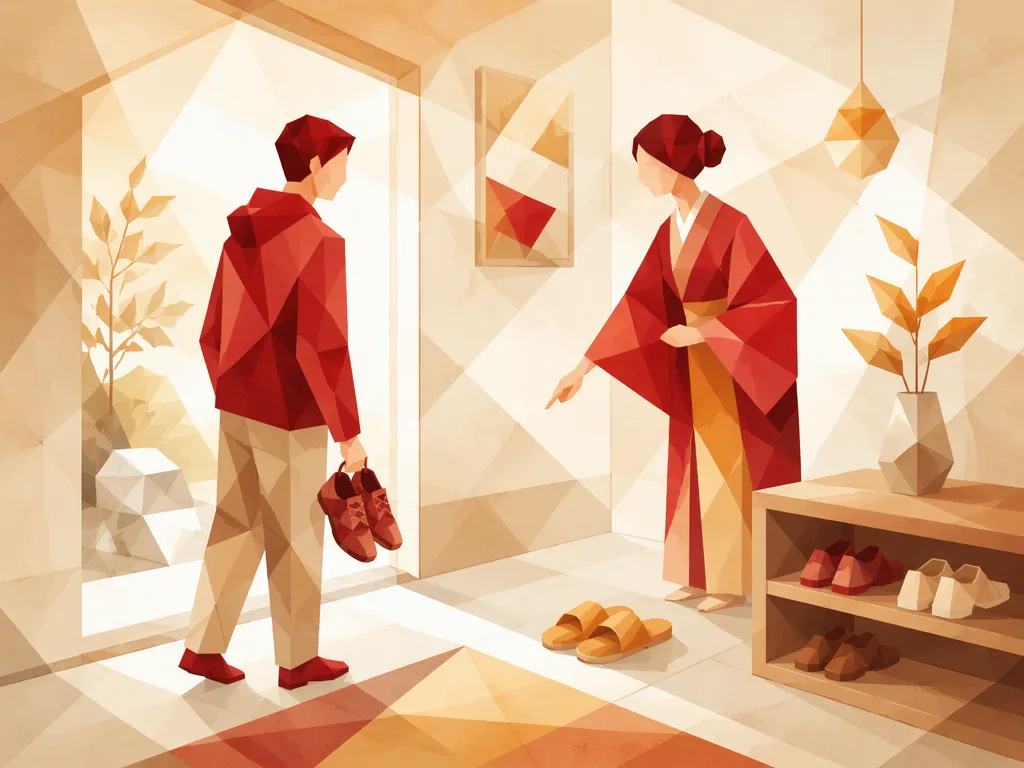
At a home in Kyoto, Japan, the host points to a shoe rack beside the front door and offers the visitor a pair of indoor slippers.
- Change out of outdoor shoes.
- Wear the slippers over outdoor shoes.
- Keep the slippers for a walk outside.
Show solution
- Change out of outdoor shoes.
Sok japán otthonban az utcai cipők bejáratnál hagyása segít tisztán tartani a benti padlót.
-
2. Válaszd ki a helyes választ.
Hol várakozzon egy új vásárló?
At a London bakery, one line serves three cashiers. The person at the front goes to whichever cashier becomes free next.
- Beside the cashier who looks fastest.
- In a new line behind one cashier.
- At the back of the shared line.
Show solution
- At the back of the shared line.
A közös sor lehetővé teszi, hogy a vásárlók a következő szabad pénztároshoz kerüljenek anélkül, hogy sort kellene választaniuk.
-
3. Válaszd ki a helyes választ.
Mi lepi meg a látogatót a vacsorával kapcsolatban?
Ben usually eats dinner at six. While visiting a family in Madrid, Spain, he learns that their evening meal normally begins at nine.
- The family eats dinner less often.
- The family eats dinner later.
- The family spends less time eating.
Show solution
- The family eats dinner later.
Spanyolországban gyakran később vacsoráznak, mint amire a látogatók számítanak, bár minden háztartásnak megvan a maga napirendje.
-
4. Válaszd ki a helyes választ.
Kiknek szánják a középen lévő ételeket?
At a restaurant in Seoul, South Korea, friends order several dishes. They place them in the center and use serving spoons to put small portions on their own plates.
- Everyone at the table.
- Only the person who ordered them.
- Only people who have finished their meals.
Show solution
- Everyone at the table.
A közösen fogyasztott fogások lehetővé teszik, hogy az emberek többféle ízt élvezzenek anélkül, hogy mindenkinek külön főételt rendelnének.
-
5. Válaszd ki a helyes választ.
Milyen további költséggel kell számolnia a látogatónak?
At a restaurant in Chicago, the menu says that a tip is not included. A local friend explains that guests usually leave extra money for the server.
- A deposit that the restaurant returns later.
- A fixed ticket price for entering the restaurant.
- A tip in addition to the meal price.
Show solution
- A tip in addition to the meal price.
A borravalóadási szokások helyenként eltérnek. Ha ellenőrizzük, hogy az ár már tartalmazza-e a szervizdíjat, elkerülhetjük, hogy kétszer fizessünk érte.
-
6. Válaszd ki a helyes választ.
Miért vár a család napnyugtáig az étkezéssel?
During Ramadan, Sam visits a Muslim family in Morocco. The adults who are fasting do not eat or drink during daylight. They invite him to share their meal after sunset.
- They are not allowed to prepare food during daylight.
- Their daily fast ends at sunset.
- Visitors can enter their home only after dark.
Gondolj az étel elkészítése és elfogyasztása közötti különbségre.
Show solution
- Their daily fast ends at sunset.
A ramadán idején a napi böjtöt megtörő étkezést iftárnak nevezik, és ez gyakran alkalmat ad arra, hogy az emberek összegyűljenek.
-
7. Válaszd ki a helyes választ.
What affects the coffee price at this café?
At a café in Rome, Italy, the menu lists one price for drinking espresso while standing at the counter and a higher price for being served at a table.
- Whether the customer uses table service.
- Whether the customer visits in the morning.
- Whether the coffee is served hot.
A customer can order the same coffee in either place.
Show solution
- Whether the customer uses table service.
At some Italian cafés, table service costs more than counter service. The place where you drink can affect the bill.
-
8. Válaszd ki a helyes választ.
Why does the friend wait to return the call?
On a train in Tokyo, a sign asks passengers not to make phone calls. When a friend's phone rings, she silences it and calls back after getting off the train.
- Passengers must use station phones instead.
- Phone signals never work inside trains.
- She wants to avoid disturbing other passengers.
Consider why a shared space might have a rule about sound.
Show solution
- She wants to avoid disturbing other passengers.
Quiet-travel rules help people share a crowded space comfortably; they do not mean passengers dislike conversation.
-
9. Válaszd ki a helyes választ.
Mit kell tennie a látogatónak vasárnap előtt?
In Frankfurt, Germany, a visitor finds that the local supermarket closes every Sunday. The museum and a nearby café are open that day. The visitor needs food for the weekend.
- Visit the museum.
- Buy groceries.
- Meet a friend at the café.
Melyik tevékenység függ attól az üzlettől, amely zárva lesz?
Show solution
- Buy groceries.
Sok német üzlet vasárnap zárva tart, míg egyes vendéglátó- és szabadidős helyek nyitva maradnak.
-
10. Válaszd ki a helyes választ.
Miért vonatkoznak eltérő érkezési szabályok a két eseményre?
In Mexico City, Ana's office meeting starts exactly at eight. Her birthday invitation also says eight, but she tells friends that arriving a little later is fine.
- Work meetings and personal celebrations can have different expectations.
- Ana expects everyone to arrive late at both events.
- The birthday invitation gives the wrong starting time.
Gondolj az egyes események céljára, ne csak a helyszínükre.
Show solution
- Work meetings and personal celebrations can have different expectations.
Az idővel kapcsolatos elvárások a helyzettől függően változhatnak, még ugyanannál a személynél, ugyanabban a városban is.
-
11. Válaszd ki a helyes választ.
What does the host's response mean?
At her birthday party in Osaka, Japan, the host thanks Eva for the wrapped gift and places it safely beside the other presents. The host says, "I'll open these after everyone has gone."
- She does not want to accept Eva's gift.
- She needs Eva to explain the gift before accepting it.
- She plans to open the gifts later rather than in front of guests.
Notice that the host thanks Eva and keeps the gift safe.
Show solution
- She plans to open the gifts later rather than in front of guests.
Gift-opening customs vary. Waiting to open a present does not necessarily show a lack of interest.
-
12. Válaszd ki a helyes választ.
Hol fogadják szívesen az alkudozást?
At a market stall in Marrakesh, Morocco, a seller invites visitors to suggest a price. A nearby shop displays a sign saying, "All prices are fixed."
- At both the stall and the shop.
- At the stall, but not at the shop.
- At the shop, but not at the stall.
Hasonlíts össze egy árjavaslat tételére szóló felhívást egy rögzített árat jelző felirattal.
Show solution
- At the stall, but not at the shop.
A vásárlási szokások még az ugyanabban az utcában működő üzletek között is eltérhetnek. Nem mindenhol számítanak alkudozásra.
-
13. Válaszd ki a helyes választ.
Mit jelez a kolléga hátralépése?
During a friendly conversation, Lee's new colleague steps back slightly. She says, "I'm enjoying our chat. I just feel more comfortable with a little more space between us."
- She prefers a greater distance while talking.
- She wants to end the conversation.
- She is having trouble hearing Lee.
Szavai megmagyarázzák a mozdulatot anélkül, hogy elutasítaná a beszélgetést.
Show solution
- She prefers a greater distance while talking.
Az, hogy mekkora személyes tér számít kényelmesnek, egyénenként eltérő. Egy kis hátralépés nem jelez automatikusan ellenszenvet.
-
14. Válaszd ki a helyes választ.
What does the guest most likely mean?
A host invites a guest to dinner. The guest replies, "That may be difficult. I have another appointment at that time." A local friend explains that people here often soften a refusal to sound polite.
- The guest has accepted the invitation.
- The guest wants to bring another person.
- The guest probably cannot attend.
Consider both the polite wording and the other appointment.
Show solution
- The guest probably cannot attend.
A refusal can be expressed indirectly. Gentle wording may still communicate that someone is unavailable.
-
15. Válaszd ki a helyes választ.
Why do the teammates misunderstand each other?
On an international team, Mina pauses to think before answering. Omar starts speaking because, in his culture, a long pause means nobody wants to answer. Mina feels that he has interrupted her.
- They disagree about the subject of the discussion.
- They give different meanings to the same pause.
- They both believe that a pause ends the discussion.
Compare what Mina is doing with what Omar thinks the silence means.
Show solution
- They give different meanings to the same pause.
Silence can signal thinking or an opportunity for someone else to speak. Talking about these habits can prevent misunderstandings.