


Hogyan gondolkodnak az állatok?
Fedezd fel, hogyan használnak eszközöket az állatok, hogyan jegyeznek meg hasznos információkat, és hogyan oldanak meg problémákat – a héjak felnyitásától egy jövőbeli lehetőségre való felkészülésig.
Preview
Questions with solutions-
1. Válaszd ki a helyes választ.
Milyen közvetlen probléma megoldásában segít a kő?
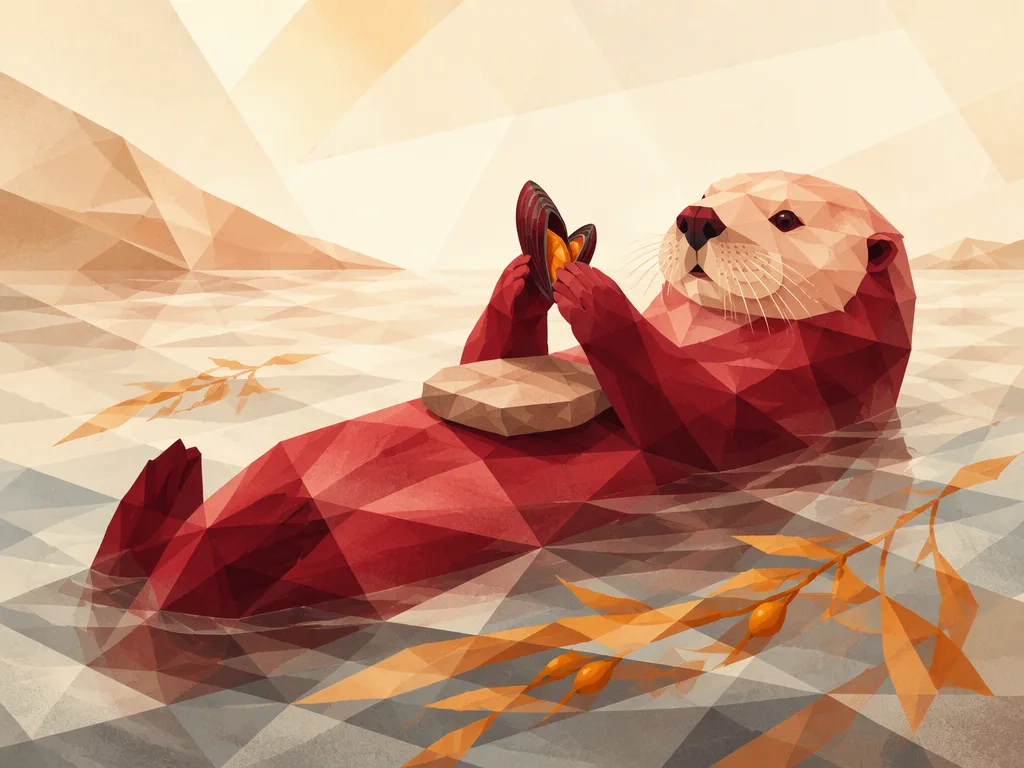
A sea otter floats on its back, rests a stone on its chest, and repeatedly strikes a mussel against it.
- Keeping the mussel from sinking before it is eaten.
- Getting through the mussel's protective shell.
- Separating the mussel from a rock on the seabed.
Gondold végig, mit tesznek az ismételt ütések egy kemény felülettel.
Show solution
- Getting through the mussel's protective shell.
A kő kemény felületet biztosít az ütésekhez. Egy külső tárgy akkor válik eszközzé, amikor egy állat valamilyen feladat elvégzésére használja.
-
2. Válaszd ki a helyes választ.
Miért teszi a levelek eltávolítása hasznosabbá a gallyat?
Before inserting a leafy twig into a narrow passage in a termite mound, a chimpanzee strips off the leaves. Termites cling to the inserted twig, allowing the chimpanzee to pull them out.
- It prevents termites from clinging to the twig.
- It widens the passage inside the mound.
- It allows the twig to enter the passage more easily.
Gondold át, hogyan változik a gally alakja.
Show solution
- It allows the twig to enter the passage more easily.
A levelek eltávolítása a feladathoz igazítja a tárgyat. Az eszközhasználat magában foglalhatja az eszköz előkészítését is, nem csak azt, hogy felvesszük.
-
3. Válaszd ki a helyes választ.
Miután a méhek megtanulják az új jutalmazási mintázatot, milyen változásra számítanál?
Bees learn to associate a blue feeder with a sugary reward. The reward is then removed from the blue feeder and offered in a yellow one instead.
- More visits to the yellow feeder.
- A lasting preference for the blue feeder despite unrewarded visits.
- Equal visits to both feeders regardless of their rewards.
A szín és a jutalom összekapcsolása hasznos, nem a szín önmagában.
Show solution
- More visits to the yellow feeder.
A méhek a jutalmak változásával módosíthatják a tanult társításokat. Ez a rugalmasság segít nekik megtalálni az értékes táplálékforrásokat.
-
4. Válaszd ki a helyes választ.
Which gardening action would preserve these memory cues?
Squirrels can use nearby landmarks to find buried food again. In a garden, the positions of familiar rocks and logs may provide reference points.
- Rearranging the rocks and logs into a different pattern.
- Leaving the familiar rocks and logs in their existing positions.
- Removing the rocks and logs to create an open search area.
A remembered location is more useful when its surroundings remain stable.
Show solution
- Leaving the familiar rocks and logs in their existing positions.
Stable landmarks help preserve spatial information. Squirrels can also use other cues, including smell, so memory is not their only resource.
-
5. Válaszd ki a helyes választ.
Why does reaching the treat require self-control?
A dog sees a treat through a transparent barrier. The opening is at one end, so reaching the treat requires first moving away from the direct route toward it.
- The dog must resist moving straight toward the visible reward.
- The dog must remember the reward because it is hidden from view.
- The dog must wait for the reward to move within reach.
The most tempting movement is not the useful one.
Show solution
- The dog must resist moving straight toward the visible reward.
This kind of detour involves inhibitory control: holding back an immediate response that would prevent success.
-
6. Válaszd ki a helyes választ.
Which information helps explain the birds' changing preference?
In cache-recovery studies, scrub-jays preferred stored worms after a short delay but favored stored nuts after a longer delay. The worms spoiled more quickly than the nuts.
- Where the food was hidden and how far the birds flew to reach it.
- How much food was hidden and how many birds were nearby.
- What food was hidden and how long ago it was stored.
One food loses its value faster than the other.
Show solution
- What food was hidden and how long ago it was stored.
Scrub-jays can combine information about what food they cached, where, and when. Researchers call this episodic-like memory, without assuming that it feels like human remembering.
-
7. Válaszd ki a helyes választ.
What practical advantage can this social cue provide?
In studies of socially learned food preferences, a rat often favors an unfamiliar food after encountering another rat that has recently eaten it.
- It reveals the location where the other rat found the food.
- It guides food choice without requiring the rat to sample every new food first.
- It reveals how much of the food the other rat consumed.
Another animal's feeding experience can influence a preference without revealing every detail.
Show solution
- It guides food choice without requiring the rat to sample every new food first.
Food odors on another rat's breath can influence later choices. This is useful social information, not a guarantee that a food is harmless.
-
8. Válaszd ki a helyes választ.
Milyen szerepet játszik a hosszabb bot megszerzése?
In experiments, some New Caledonian crows have used a short stick to retrieve a longer one, then used the longer stick to reach food that the short stick could not reach.
- It is an intermediate goal that makes the final goal achievable.
- It is the final reward, making food retrieval unnecessary.
- It repeats the same food-retrieval action with an equally capable tool.
Az első eszköz nem éri el az ételt, de megváltoztatja, hogy mi válik lehetségessé.
Show solution
- It is an intermediate goal that makes the final goal achievable.
Az eszközök egymást követő használata kisebb célokat kapcsol össze: egy tárgy megszerzése biztosítja egy későbbi lépés végrehajtásához szükséges eszközt.
-
9. Válaszd ki a helyes választ.
Which ability is this behavior used to investigate?
Researchers have observed dolphins positioning their bodies in front of a mirror to inspect temporary marks on areas they cannot normally see directly.
- Distinguishing familiar companions from unfamiliar dolphins.
- Learning new movements by copying another dolphin.
- Recognizing their own bodies in a reflection.
Consider why inspecting a mark on one's own body matters.
Show solution
- Recognizing their own bodies in a reflection.
Mirror-directed inspection is relevant to self-recognition. It does not, by itself, establish every form of self-awareness.
-
10. Válaszd ki a helyes választ.
What makes retaining the tool future-oriented?
In some experiments, apes have selected and retained a useful tool before returning later to an apparatus where they could use it to obtain food. The tool had no immediate use when selected.
- Selecting the tool completes the feeding task before the delay begins.
- Keeping the tool preserves the means to benefit from a later opportunity.
- The tool provides its reward during selection rather than during later use.
Separate the time of preparation from the time of benefit.
Show solution
- Keeping the tool preserves the means to benefit from a later opportunity.
Preparing now for a later task is future-directed behavior. Whether an ape imagines that future as a human would is a separate question.