


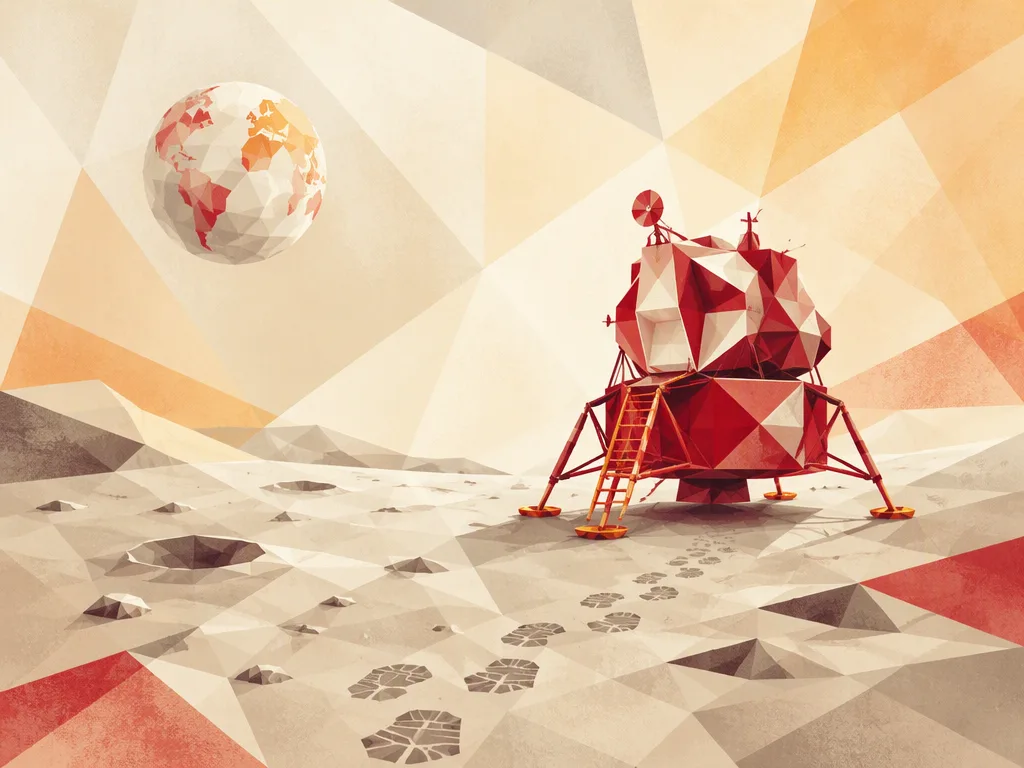
Űrküldetések, amelyek történelmet írtak
Fedezd fel a Holdhoz, bolygókhoz és üstökösökhöz vezető korszakalkotó utazásokat – és tudd meg, hogyan tették őket lehetővé az ötletes mérnöki megoldások.
Preview
Questions with solutions-
1. Válaszd ki a helyes választ.
Mi tette történelmi jelentőségűvé a Szputnyik–1-et?
Launched in 1957, Sputnik 1 broadcast radio signals while circling Earth.
- It was the first satellite to carry an animal into orbit.
- It was the first human-made satellite to orbit Earth.
- It was the first satellite to transmit television programs.
Legfőbb eredménye a pályára állás volt, nem az utasszállítás.
Show solution
- It was the first human-made satellite to orbit Earth.
Az emberek a földről is észlelhették a Szputnyik rádiójeleit, így ez a kis műhold az űrkorszak erőteljes jelképévé vált.
-
2. Válaszd ki a helyes választ.
Mit tett Jurij Gagarin elsőként az emberek közül?
Gagarin traveled aboard Vostok 1 in 1961. His historic flight lasted less than two hours.
- Travel into space and orbit Earth.
- Walk outside a spacecraft.
- Live aboard a space station.
A Föld körüli útja során végig az űrhajójában maradt.
Show solution
- Travel into space and orbit Earth.
A Vosztok–1 egyszer kerülte meg a Földet. Gagarin az ereszkedés utolsó szakaszában katapultált a kapszulából, és ejtőernyővel ért földet.
-
3. Válaszd ki a helyes választ.
Which achievement made Apollo 11 historic?
In July 1969, Apollo 11 carried Neil Armstrong, Buzz Aldrin, and Michael Collins toward the Moon.
- A spacecraft landed on the Moon for the first time.
- A crew orbited the Moon for the first time.
- Humans landed on the Moon for the first time.
The mission's most famous moment happened on the lunar surface.
Show solution
- Humans landed on the Moon for the first time.
Armstrong and Aldrin explored the surface while Collins remained in lunar orbit, ready for their return.
-
4. Válaszd ki a helyes választ.
Milyen típusú küldetés volt a Mariner 4?
In 1965, Mariner 4 passed Mars and transmitted close-up images. It continued into space rather than entering orbit or reaching the surface.
- A surface landing.
- A flyby.
- An orbital mission.
Az űrszonda elhaladás közben gyűjtött információkat.
Show solution
- A flyby.
A Mariner 4 küldte vissza az első sikeres közeli felvételeket a Marsról, amelyek becsapódási kráterekkel tarkított tájat tártak fel.
-
5. Válaszd ki a helyes választ.
Miért volt különösen nehéz a Venera 13 számára hosszú ideig a Vénuszon maradni?
Venera 13 landed on Venus in 1982. Surface temperatures there are high enough to melt lead.
- Venus has no solid ground to support a lander.
- The surface is so cold that batteries quickly freeze.
- The heat puts severe stress on electronic equipment.
Gondold végig, hogyan reagálnak a hétköznapi elektronikus eszközök a nagyon magas hőmérsékletre.
Show solution
- The heat puts severe stress on electronic equipment.
A Vénusz sűrű légköre csapdába ejti a hőt, így a felszíne forróbb a Merkúrénál, noha a Vénusz távolabb van a Naptól.
-
6. Válaszd ki a helyes választ.
Milyen új szerepet kapott az Apollo 13 holdkompja?
After an oxygen tank failed on Apollo 13, the Moon landing was canceled. The crew moved into the lunar module while the command module's systems were shut down to save power.
- A temporary life-support shelter for the crew.
- A replacement capsule for reentry through Earth's atmosphere.
- A vehicle for completing an uncrewed Moon landing.
A legsürgősebb feladat az űrhajósok életben tartása volt, nem a Hold elérése.
Show solution
- A temporary life-support shelter for the crew.
A legénység később visszatért a parancsnoki modulba, amelynek hőpajzsa megvédte őket a légkörbe való visszatérés során.
-
7. Válaszd ki a helyes választ.
How did astronauts on the 1993 servicing mission improve Hubble's images?
Hubble's main mirror had a flaw that blurred its images. Astronauts installed equipment that adjusted the path of light reaching its instruments.
- They removed and replaced the entire main mirror.
- They added corrective optics that made up for the mirror's flaw.
- They reshaped the original mirror's surface in orbit.
Think of a solution similar to giving the telescope glasses.
Show solution
- They added corrective optics that made up for the mirror's flaw.
Hubble was designed for servicing in space, so astronauts could replace instruments without bringing the telescope back to Earth.
-
8. Válaszd ki a helyes választ.
Melyik feladat végrehajtásához kellett a Huygensnek elérnie a talajt?
Cassini studied Saturn from orbit. Its companion probe, Huygens, separated from it, descended through the atmosphere of Saturn's moon Titan, and landed in 2005.
- Tracking Titan's path around Saturn.
- Studying the upper atmosphere during descent.
- Directly testing how firm the ground was at the landing site.
Az egyik méréshez fizikai érintkezésre volt szükség a felszínnel.
Show solution
- Directly testing how firm the ground was at the landing site.
A Huygens olyan műszert vitt magával, amely a talajt a leszállás pillanatában vizsgálta. Ez volt az első űrszonda, amely a Föld Holdjától eltérő holdon szállt le.
-
9. Válaszd ki a helyes választ.
Why was aerogel useful for collecting comet dust?
Stardust caught fast-moving comet particles in aerogel, an extremely light, porous material. The grains left tracks as the material gradually slowed them down.
- It captured fragile grains while limiting damage from sudden impacts.
- It turned the grains into gas for storage.
- It reflected the grains away to prevent collection.
A sudden stop could destroy the material scientists wanted to study.
Show solution
- It captured fragile grains while limiting damage from sudden impacts.
Stardust returned its collector to Earth, allowing laboratories to examine the captured comet material with many different instruments.
-
10. Válaszd ki a helyes választ.
Hogyan segítették a bolygókkal való találkozások a Voyager 2-t a továbbhaladásban?
Voyager 2 reached several giant planets using carefully timed close passes. These gravity assists helped it travel farther without relying only on its engines.
- Friction in the planets' atmospheres increased its speed.
- The planets' gravity changed its speed and direction.
- The spacecraft collected fresh rocket fuel from the planets' clouds.
Az űrszondát egy távolról ható erő segítette.
Show solution
- The planets' gravity changed its speed and direction.
Az energianyereség a bolygó mozgásából származik, nem a közelben begyűjtött üzemanyagból. A bolygó saját mozgása rendkívül kis mértékben változik.
-
11. Válaszd ki a helyes választ.
Miért kerülhetett a Philae egy kis visszapattanás miatt messze az első leszállási helyétől?
Rosetta's Philae lander reached a small comet in 2014, but its anchoring harpoons failed to fire. It bounced away from its first landing spot before touching down elsewhere.
- Its harpoons fired so strongly that they launched it upward.
- The comet had no gravity, so the lander could never touch down again.
- The comet's weak gravity pulled the lander back down only gently.
Egy kis üstökös tömege sokkal kisebb a Földénél, de így is vonzza a tárgyakat.
Show solution
- The comet's weak gravity pulled the lander back down only gently.
Egy kis gravitációjú égitesten nem mindig elég a lágy leszállás. A rögzítőberendezések segítenek abban, hogy az űreszköz az érintkezés után is a felszínhez rögzítve maradjon.
-
12. Válaszd ki a helyes választ.
Mit mutatott meg a rövidebb keringési idő?
DART deliberately struck Dimorphos, a small moon of an asteroid. After the impact, Dimorphos completed each orbit around its larger companion in less time.
- A spacecraft impact can change an asteroid's motion.
- The collision completely destroyed Dimorphos.
- Every threatening asteroid can now be redirected with certainty.
A mérés egy konkrét változást mutat, de nem jelent garanciát minden jövőbeli helyzetre.
Show solution
- A spacecraft impact can change an asteroid's motion.
A DART ellenőrzött körülmények között végzett bolygóvédelmi teszt volt. A Dimorphos nem jelentett veszélyt a Földre, így a tudósok biztonságosan tesztelhették a módszert.