


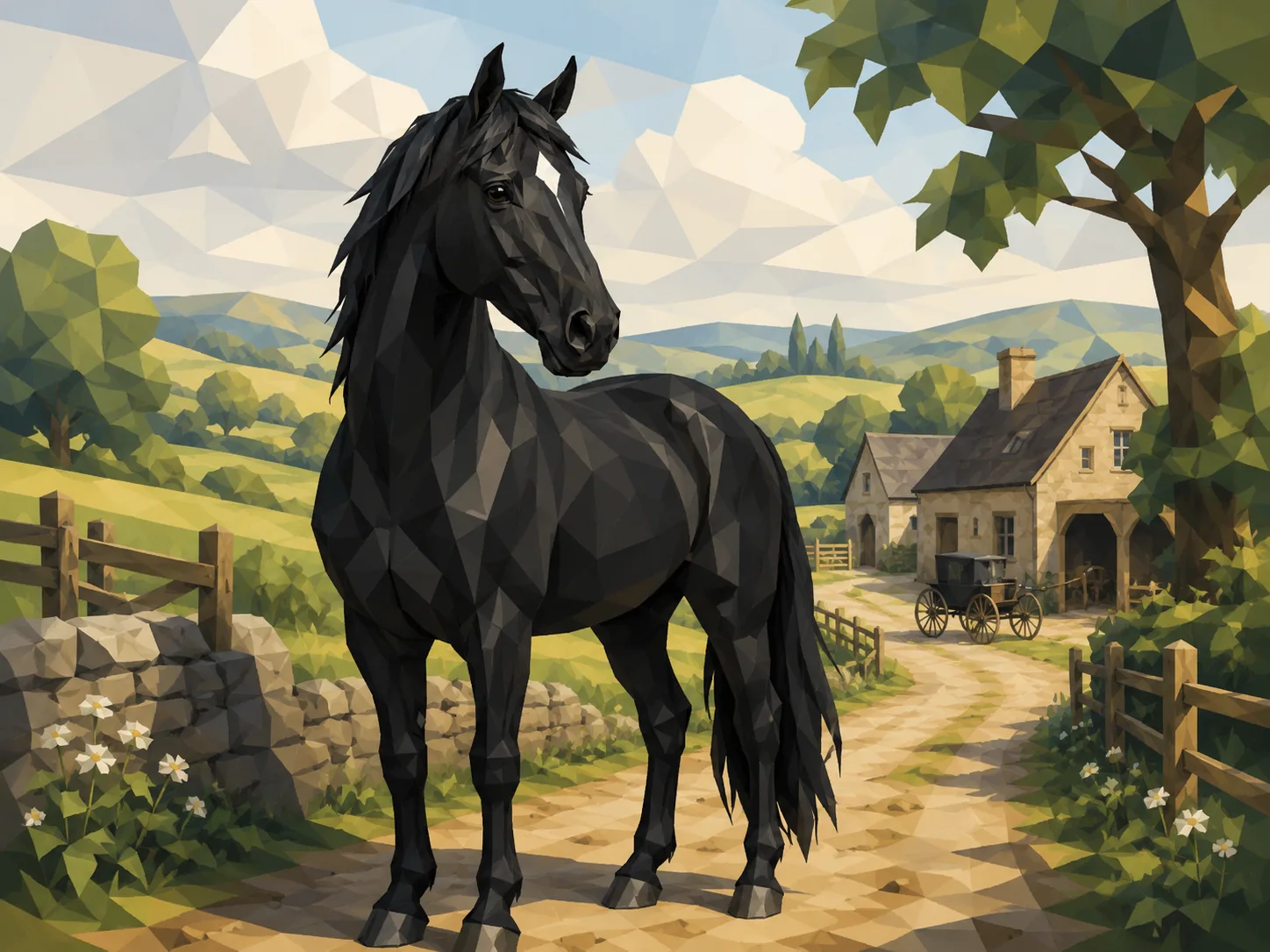
I never knew a better man than my new master. He was kind and good, as determined to do right as John Manly, and so merry that hardly anyone could quarrel with him. He liked making up little songs and singing them to himself. One of his favourites was this:
“Come, father and mother,
And sister and brother,
Come, all of you, turn to
And help one another.”
And so they did: Harry rubbed the harness, Polly and Dolly cleaned the cab, and there was always a lot of laughing.
Jerry could not bear wasting time. Nothing made him so nearly angry as people who were always late and then wanted a cab horse driven hard to make up for it.
One day two wild-looking young men came out of a pub near the stand.
“Here, cabby! Get us to Victoria Station for the one o’clock train, fast, and you’ll have a shilling extra.”
“I’ll take you at the usual speed, gentlemen. A shilling doesn’t pay for driving a horse like that.”
Larry’s cab was next to ours. He threw open the door. “I’m your man, gentlemen!” As he shut them in, he winked at Jerry. “It’s against his conscience to go faster than a slow trot.” Then he whipped his tired horse and drove off as fast as he could.
Jerry patted my neck. “No, Jack, a shilling wouldn’t pay for that, would it, old boy?”
But Jerry was not against a fast drive, if only he knew why. One morning a young man with a heavy bag stepped on a piece of orange peel near the stand and fell hard. Jerry was the first to run and lift him up. He was helped into a shop, and ten minutes later a shopman called us over. The young man came out to the cab.
“Can you take me to the South-Eastern Railway station?” he asked. “I must catch the twelve o’clock train. I’ll gladly pay you extra.”
“I’ll do my very best, sir, if you think you’re well enough.” He looked terribly white and ill.
“I must go. Please, let’s lose no time.”
“Now then, Jack, my boy,” said Jerry, “let’s show them how fast we can go, when we know why.”
It is always hard to drive fast through London in the middle of the day, but when a good driver and a good horse understand each other, it is wonderful what they can do. I could feel the lightest touch of the rein, and Jerry never needed the whip.
At the bottom of Cheapside we were stuck for three or four minutes, and the young man wanted to get out and walk. “I think we’ll be in time, sir,” said Jerry, “and your bag is too heavy for you.” Just then the cart in front moved on. In and out, in and out we went, as fast as a horse could, and on London Bridge the road was clear. We rushed into the station just as the big clock showed eight minutes to twelve.
“Thank God, we’re in time!” said the young man. “Thank you, my friend, and your good horse too. You have saved me more than money can pay for. Take this extra money.”
“No, sir, thank you all the same. I’m so glad we made it. Now hurry, the bell is ringing.”
Back at the stand, the other drivers laughed at him for racing to a train for extra money, against his own principles, and asked how much he had got.
“The gentleman offered me extra, but I didn’t take it,” said Jerry. “It was pay enough to see how glad he was. And if Jack and I choose to have a quick run now and then, that’s our business.”
“Well,” said Larry, “you’ll never be a rich man.”
“Most likely not,” said Jerry, “but I don’t think I’ll be any less happy for that.”
“If you ever do get rich, Jerry,” said the Governor, looking over the top of his cab, “you’ll deserve it. As for you, Larry, you’ll die poor. You spend too much on whips. Your whip is always going, and if it doesn’t wear you out, it wears out your horses. That’s why you’re always changing them.”
“Well, I haven’t had good luck,” said Larry. “That’s the problem.”
“And you never will,” said the Governor. “Good Luck is very careful who she rides with, and she mostly chooses people with common sense and a good heart.”