


Two or three weeks later, as we came into the yard one evening, Polly came running across the road with the lantern.
“It has all come right, Jerry! Mrs Briggs sent her servant to ask you to take her out tomorrow at eleven. They tried other cabs, but some drove too fast, some too slow, and the lady says none is as nice and clean as yours.”
Jerry laughed. “‘It will all come right some day or night.’ You were right, my dear. You usually are.”
After that Mrs Briggs took Jerry’s cab as often as before, but never on a Sunday. Then came a day when we did have Sunday work, and this was how it happened.
One Sunday morning, while Jerry was cleaning me in the yard, Polly came up to him with something on her mind.
“Poor Dinah Brown has just had a letter,” she said. “Her mother is very ill, and she must go at once if she wants to see her alive. It’s more than ten miles away in the country, and from the train she would still have four miles to walk, with a baby only four weeks old. She asks if you would take her. She promises to pay when she can.”
“It isn’t the money I’m thinking of,” said Jerry, “but of losing our Sunday. The horses are tired, and so am I.”
“It’s hard for all of us,” said Polly. “But we should do to other people as we would like them to do to us. I know what I would want if my mother was dying.”
“Why, Polly, you’re as good as the minister! Tell Dinah I’ll be ready at ten. But first go round to Braydon the butcher and ask if he’ll lend me his small carriage. He never uses it on a Sunday, and it’s much lighter for the horse.”
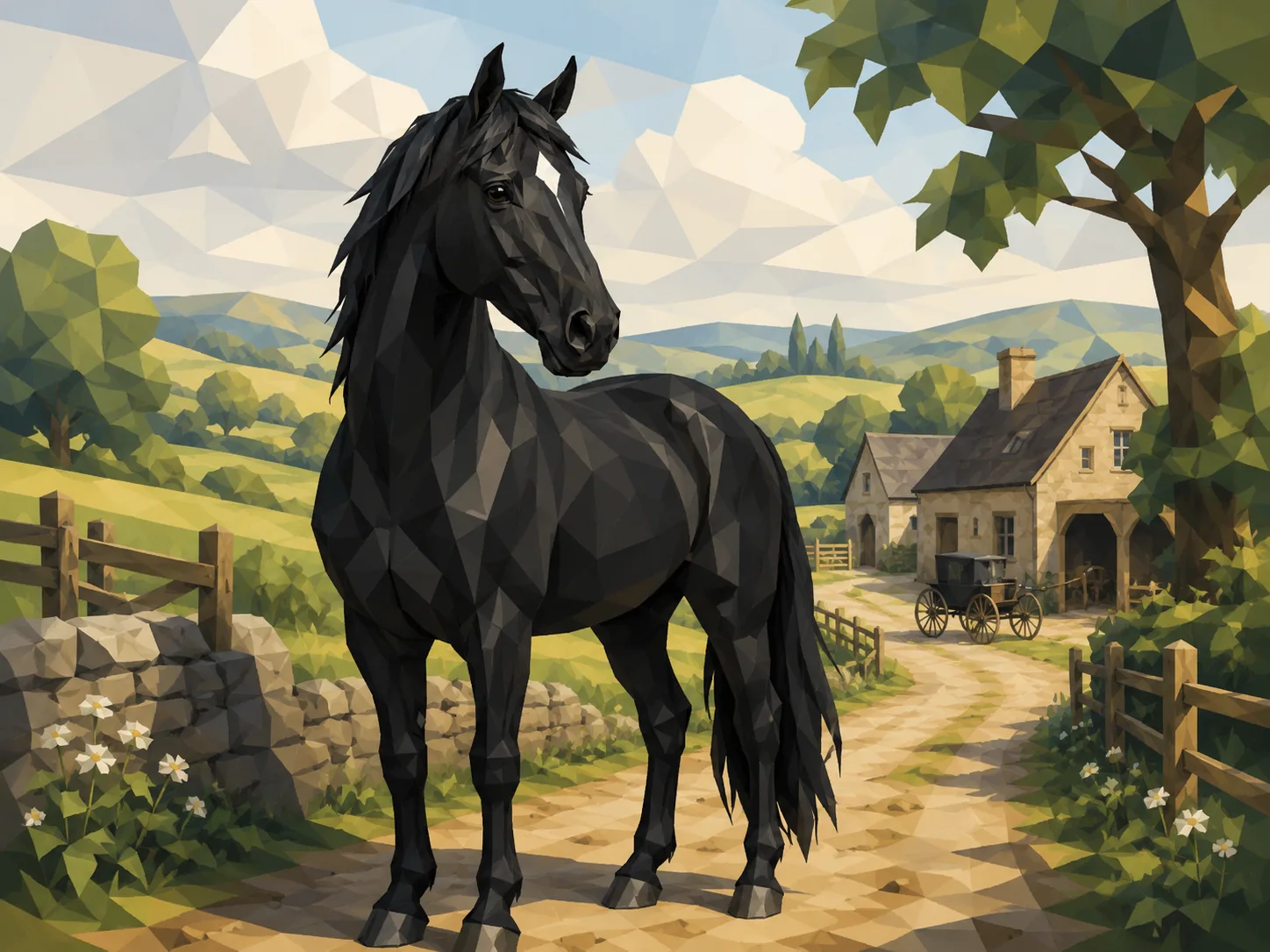
The butcher lent it gladly, and at ten o’clock we set off. After the heavy cab, the light little carriage seemed like nothing. It was a fine May day, and as soon as we were out of the town, the sweet air and the soft country roads made me feel fresh again.
Dinah’s family lived in a small farmhouse up a green lane, next to a meadow with shady trees. Her brother offered to tie me up in the cowshed, but Jerry said there was nothing his horse would like better than an hour or two in that beautiful meadow.
When my harness was off, I did not know what to do first: eat the grass, roll on my back, lie down, or gallop across the meadow for joy. So I did them all, one after another. I had not been in a field since I left poor Ginger at Earlshall. Jerry seemed just as happy. He sat under a tree and listened to the birds, sang to himself, read from his little brown book, and picked flowers by the stream.
We drove home at an easy pace. “Well, Polly,” said Jerry, as we came into the yard, “I haven’t lost my Sunday after all. The birds were singing hymns in every bush, and I joined in. And Jack was like a young colt.”
When he gave Dolly the flowers, she jumped about for joy.