


Theme & Story
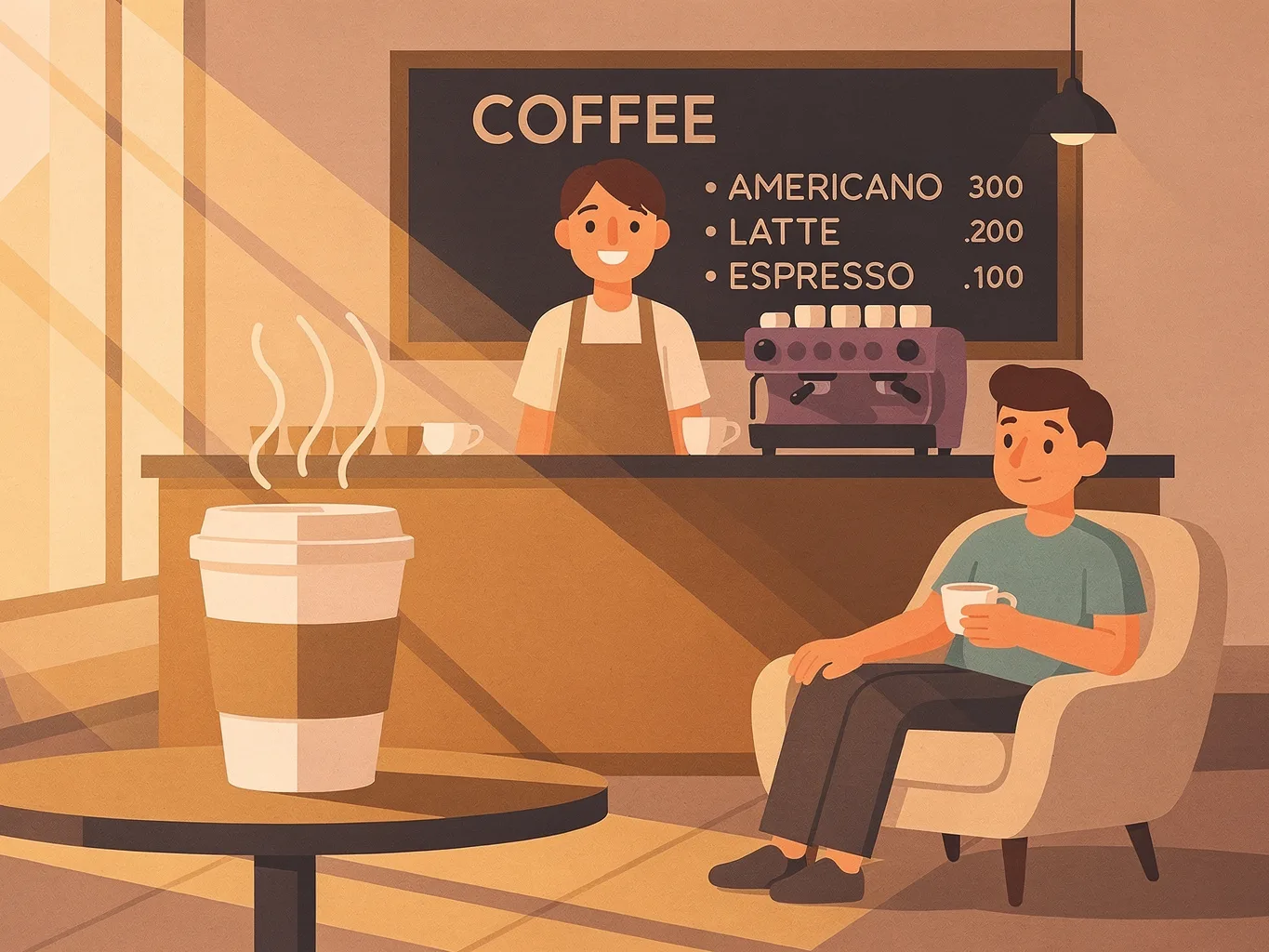
“Large Americano, Please” tells a simple, everyday story: someone enters a café, studies the menu, orders a drink, pays, waits, and then relaxes with their coffee. The song is especially useful for language learners because it follows a real-life conversation in a café, using practical phrases like “What can I get for you?”, “Anything else?”, and “Can I get a receipt?”
The mood is calm and comforting. The café becomes a small peaceful world where the speaker can slow down, enjoy the smell of coffee, and feel at home.
Metaphors & Meaning
The lyrics mostly describe realistic actions, but there are a few poetic touches:
- “The barista is busy, waking the espresso up” — Espresso is not literally asleep. This personification makes the coffee machine feel alive and energetic, as if the drink is being gently awakened.
- “My moment in the sun” — This phrase often means a time when someone gets attention or success. Here, it humorously describes the small happy moment when the speaker receives their coffee.
- “Let the worries stop” — The coffee break becomes more than just buying a drink; it is a moment of rest from stress.
- “I feel like I belong” — The café is presented as a welcoming space, a place of comfort and connection.
- Culturally, the song reflects a common café routine in English-speaking countries: ordering at the counter, giving your name, paying by card or phone with a tap, waiting for your drink, and choosing “for here or to go.”
Vocabulary & Slang
- café — A small restaurant or coffee shop.
- bell rings — Many café doors have a small bell that makes a sound when someone enters.
- beans and steam — Refers to coffee beans and hot steam from the coffee machine.
- chalkboard menu — A menu written on a blackboard, common in cafés.
- latte — Coffee with steamed milk.
- Americano — Espresso mixed with hot water; usually strong and dark.
- hot or iced — A common question when ordering drinks.
- for here or to go — Do you want to drink it inside the café, or take it away?
- paper cup — A disposable cup often used for takeaway drinks.
- barista — A person who prepares and serves coffee.
- tap — Paying by touching a card or phone to a payment machine.
- receipt — A paper or digital record of what you bought.
- that is all — A polite way to say you do not want anything else.
Grammar Notes
- Polite requests: The line “I would like a large americano, please” is a very polite and useful ordering phrase. It is softer than “I want…”
- Service questions: “What can I get for you?” is a common phrase workers use in cafés, restaurants, and shops.
- Short conversational answers: “Anything else?” and “No, that is all” are natural, efficient phrases in customer-service situations.
- Choice questions: “Hot or iced? For here or to go?” are shortened questions. Full versions would be: “Would you like it hot or iced?” and “Is it for here or to go?”
- Present simple for routines: Lines like “I scan,” “I pay,” “I wait,” “I sit,” and “I sip” make the scene feel immediate and easy to follow.
- A small grammar issue: The line “a steam rises from the top” sounds slightly unnatural. In standard English, we usually say “steam rises from the top” because steam is uncountable. This may be a lyric choice to fit the rhythm.