


Discover the science behind everyday experiences, from goosebumps and hiccups to balance and sore muscles.
Preview
Questions with solutions-
1. Alege răspunsul corect.
How does sweat help cool your body?
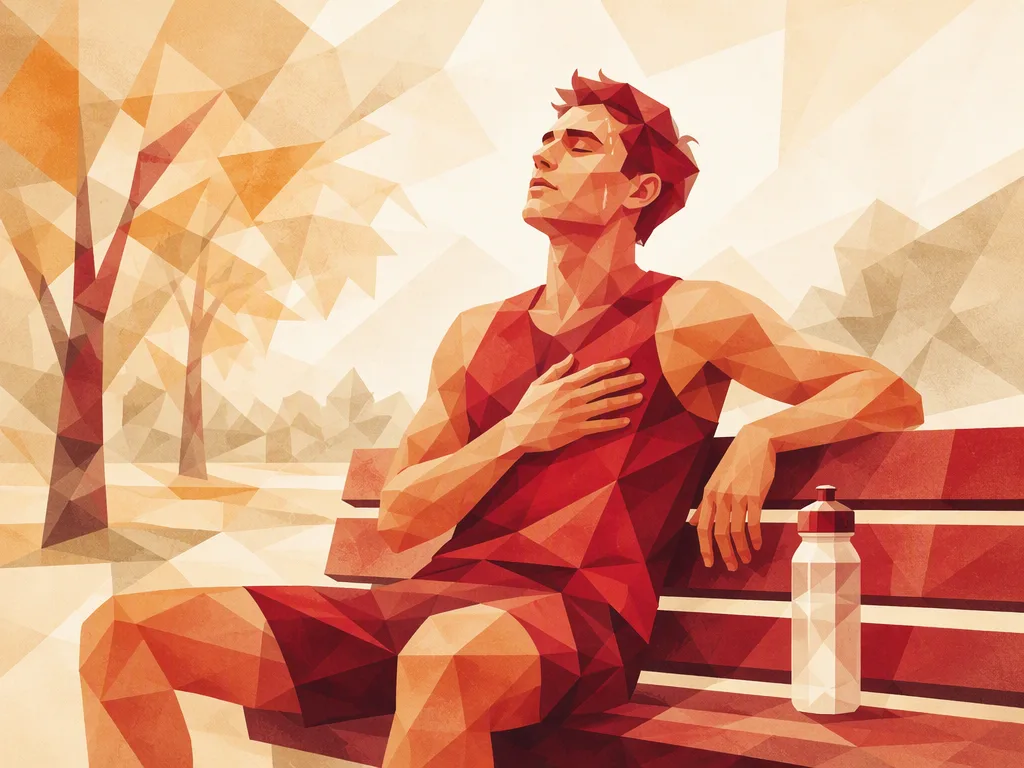
After a run, your skin is wet with sweat. A breeze helps you cool down.
- It switches off heat production in working muscles.
- It takes heat from the skin as it evaporates.
- It cools the body mainly by staying liquid on the skin.
Think about what happens when water dries.
Show solution
- It takes heat from the skin as it evaporates.
Evaporation uses heat from your skin. Sweat that drips off without evaporating provides much less cooling.
-
2. Alege răspunsul corect.
What does blinking do for the surface of your eye?
You blink regularly, even when there is no dust or bright light around you.
- It spreads a thin layer of tears over the surface.
- It makes the pupil smaller to let in less light.
- It changes the shape of the lens to focus on nearby objects.
The exposed surface of the eye needs moisture.
Show solution
- It spreads a thin layer of tears over the surface.
The tear layer keeps the eye moist and creates a smooth surface that helps light enter clearly.
-
3. Completează spațiul liber.
When you get goosebumps, tiny muscles at the base of your hairs contract, making the hairs ___.
- grow longer
- fall out
- stand up
This movement can help animals with thick fur hold warm air close to their skin.
Show solution
When you get goosebumps, tiny muscles at the base of your hairs contract, making the hairs stand up.
Raised hairs trap more air in a thick coat of fur. Humans have too little body hair for goosebumps to provide much warmth.
-
4. Alege răspunsul corect.
Why can a blocked nose make food seem less flavorful?
You have a cold. You can still notice sweetness, but your favorite soup seems to have less flavor.
- The nose normally detects sweetness instead of the tongue.
- Fewer food aromas reach the smell receptors.
- A blocked nose prevents saliva from dissolving food.
Flavor combines more than the basic tastes detected by your tongue.
Show solution
- Fewer food aromas reach the smell receptors.
Aromas travel from your mouth toward your nose while you eat. Smell helps you recognize flavors beyond basic tastes such as sweet and salty.
-
5. Completează spațiul liber.
A hiccup begins when the ___, the main breathing muscle below the lungs, contracts suddenly.
- diaphragm
- stomach
- esophagus
This muscle normally helps draw air into your lungs.
Show solution
A hiccup begins when the diaphragm, the main breathing muscle below the lungs, contracts suddenly.
After the sudden muscle contraction, the vocal cords close quickly. That closure produces the familiar hiccup sound.
-
6. Alege răspunsul corect.
What normally protects the stomach lining from its acid?
Your stomach contains strong acid that helps digestion, yet its healthy lining is usually protected.
- The acid stays in the center and never touches the stomach wall.
- The stomach wall is made of tissue that acid cannot damage.
- A mucus layer helps shield the lining and holds substances that neutralize acid.
The protection comes from a barrier on the inner surface.
Show solution
- A mucus layer helps shield the lining and holds substances that neutralize acid.
The mucus barrier holds bicarbonate, which neutralizes acid near the stomach lining. Damage to this protection can contribute to ulcers.
-
7. Alege răspunsul corect.
How can your hand begin moving so quickly?
Your hand begins to pull away from a hot pan before you are fully aware of the pain.
- The spinal cord can start a withdrawal response.
- Heat makes the arm muscles contract without any nerve signals.
- You must consciously judge the temperature before your hand can move.
Not every protective movement requires a conscious decision.
Show solution
- The spinal cord can start a withdrawal response.
A withdrawal reflex uses a short nerve pathway through the spinal cord. Your brain still receives information about what happened.
-
8. Alege răspunsul corect.
Why does each eye have a blind spot?
Each healthy eye has a small area where it cannot detect an image. You usually do not notice this gap.
- The pupil casts a permanent shadow on the retina.
- The optic nerve leaves the eye at a point with no light-sensitive cells.
- The lens cannot focus light onto the center of the retina.
Consider where the eye's connection to the brain passes through the retina.
Show solution
- The optic nerve leaves the eye at a point with no light-sensitive cells.
Your brain usually fills in the missing area using nearby visual information and information from the other eye.
-
9. Completează spațiul liber.
Bones are living tissue that responds to repeated loads. Regular weight-bearing activity can help them become ___ as tissue is rebuilt.
- softer
- lighter
- denser
Bones can adapt to support the loads regularly placed on them.
Show solution
Bones are living tissue that responds to repeated loads. Regular weight-bearing activity can help them become denser as tissue is rebuilt.
Bone is constantly being removed and replaced. Activities such as walking can help maintain or increase bone density.
-
10. Alege răspunsul corect.
What helps produce normal water-related finger wrinkles?
Your fingertips wrinkle after several minutes in water. This reaction is much weaker in fingers with certain kinds of nerve damage.
- Nerve activity changes blood flow beneath the skin.
- The skin simply absorbs water and swells, with no role for nerves.
- Water pressure pushes the skin into folds without a response from the body.
The link with nerve damage suggests an active response inside the finger.
Show solution
- Nerve activity changes blood flow beneath the skin.
Nerve activity narrows small blood vessels in the fingertips. The resulting change in tissue volume helps form the wrinkles.
-
11. Alege răspunsul corect.
Why can the feeling of movement continue after you stop?
You spin around, stop, and briefly feel as if you are still moving.
- The outer ears continue turning after the head stops.
- The brain temporarily stops receiving all balance signals.
- Fluid in the inner ear keeps moving briefly relative to the stopped head.
Some balance sensors respond to movement inside fluid-filled structures.
Show solution
- Fluid in the inner ear keeps moving briefly relative to the stopped head.
Moving fluid bends tiny sensory hairs in the inner ear. These sensors can signal rotation even after your head has stopped.
-
12. Alege răspunsul corect.
What can contribute to the soreness that appears later?
Your thighs feel sore the day after an unfamiliar downhill hike. The exercise-related rise in lactate ended much earlier.
- Lactate remaining trapped in the muscles for several days.
- The muscles' response to unfamiliar strain, including inflammation.
- Blood flow to the working muscles stopping until the next workout.
Walking downhill makes muscles work while lengthening, which can cause delayed soreness.
Show solution
- The muscles' response to unfamiliar strain, including inflammation.
Unfamiliar exercise, especially when muscles work while lengthening, can trigger delayed soreness. Being sore is not a reliable measure of workout quality.