What the song is about
The singer wants to
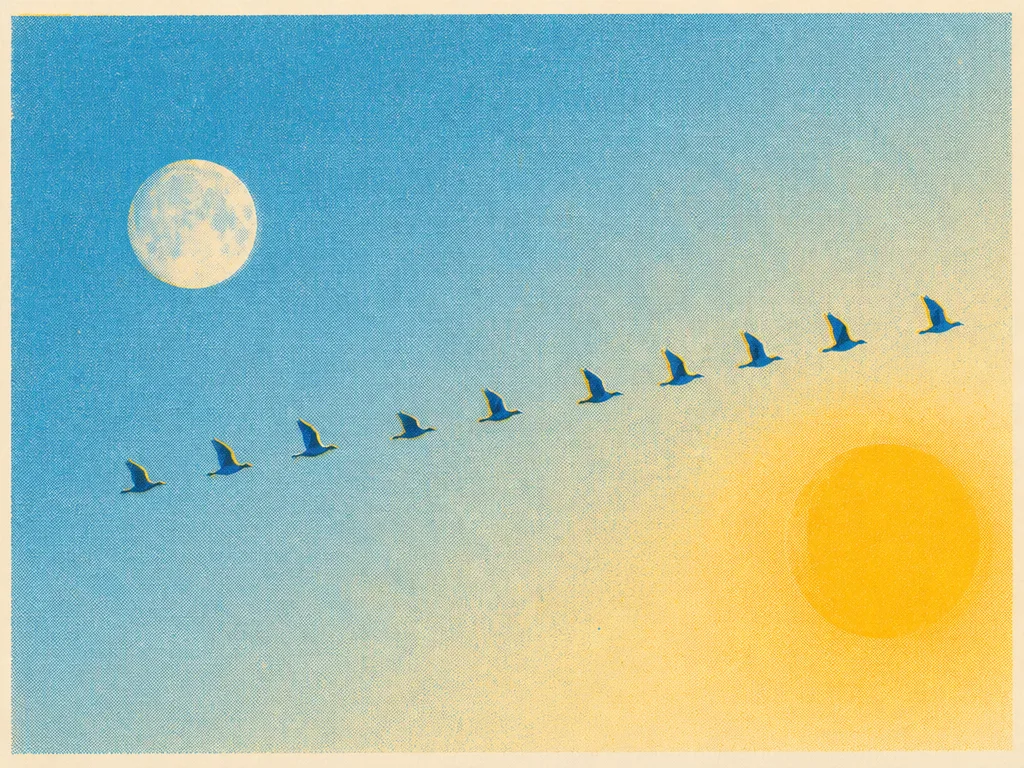
count the whole world, big things and small things, from the moon to the sun. Along the way we count stars, days, people, shoes, clouds and birds. In the bridge the message turns warm: when you add everything up,
we have everything we need right here.
Useful words and expressions
- Cardinal numbers: one, two, three … ten, twenty, fifty, plus big numbers a hundred, a thousand, a million. Note that we say a hundred stars, not
a hundreds stars: hundred, thousand, million take no -s after a number. - Zero: zero clouds means no clouds at all.
- Ordinal numbers: the first, the second, the third (for order, not amount).
- one by one: one after the other.
- a little / a lot: a small amount / a big amount.
- half and double: half a cup (note the word order: half a, not a half), make it double (two times as much).
- add up: to put numbers together; adding up is never trouble means adding is easy.
- the total / the total sum: the result when you add everything.
- put two and two together: an idiom meaning to understand something by connecting the facts.
- crystal clear: very easy to understand.
- every single thing: absolutely everything (single makes it stronger).
Grammar
- Plural nouns after numbers: a hundred stars, twenty people, fifty shoes, ten little birds. Remember that people is already plural.
- Some … and some …: Some are big and some are small is a useful way to compare groups.
- Present continuous for things happening now: Ten little birds are flying by, We are looking at…
- -ing form as a subject: Counting numbers is so fun. The -ing form (gerund) works like a noun and takes a singular verb (is).
- Imperatives: Count the world, Count with me, Don't be late.
- Zero conditional (present + present, for something that is always true): If you put two and two together, the total sum is crystal clear.
Watch out: song language
- Tell me every single thing you got is informal speech, chosen to rhyme with a lot. In careful English say you've got or you have.
- Counting numbers is so fun is common in casual speech, but many people prefer so much fun or really fun.
- Fifty shoes upon their feet: upon is old-fashioned and poetic here, used for the rhythm. In everyday English say on their feet. (Also, twenty people would really wear forty shoes, so the numbers are just for fun.)
- We are looking at the math forever is a dreamy song line made to rhyme with together; it is not a normal everyday sentence. Also note that math is American English; British English says maths.